
 Download Now
State of Human Attention
Report 2026
Global screen-time behaviour, digital habits, and attention patterns based on anonymised data from approximately 10,000 users worldwide
Screen time Report Deck
Explore key findings from the screen time report or download the full deck

What this study is
The State of Human Attention is a global research study examining how people use their phones, how much time they spend on screens, and what drives that behaviour across countries, ages, professions, and daily routines.
How this study was conducted
This study is based on aggregated insights from anonymised app-usage data, surveys, onboarding inputs, and interviews collected from approximately 10,000 users worldwide. The findings are intended to describe broad behavioural patterns rather than individual outcomes.
Key Findings
- •Average global screen time now stands at 5 hours 37 minutes per day, with multiple countries exceeding 7 hours daily.
- •Instagram, YouTube, and TikTok are the most commonly blocked apps worldwide, yet blocking them does not significantly reduce total screen time.
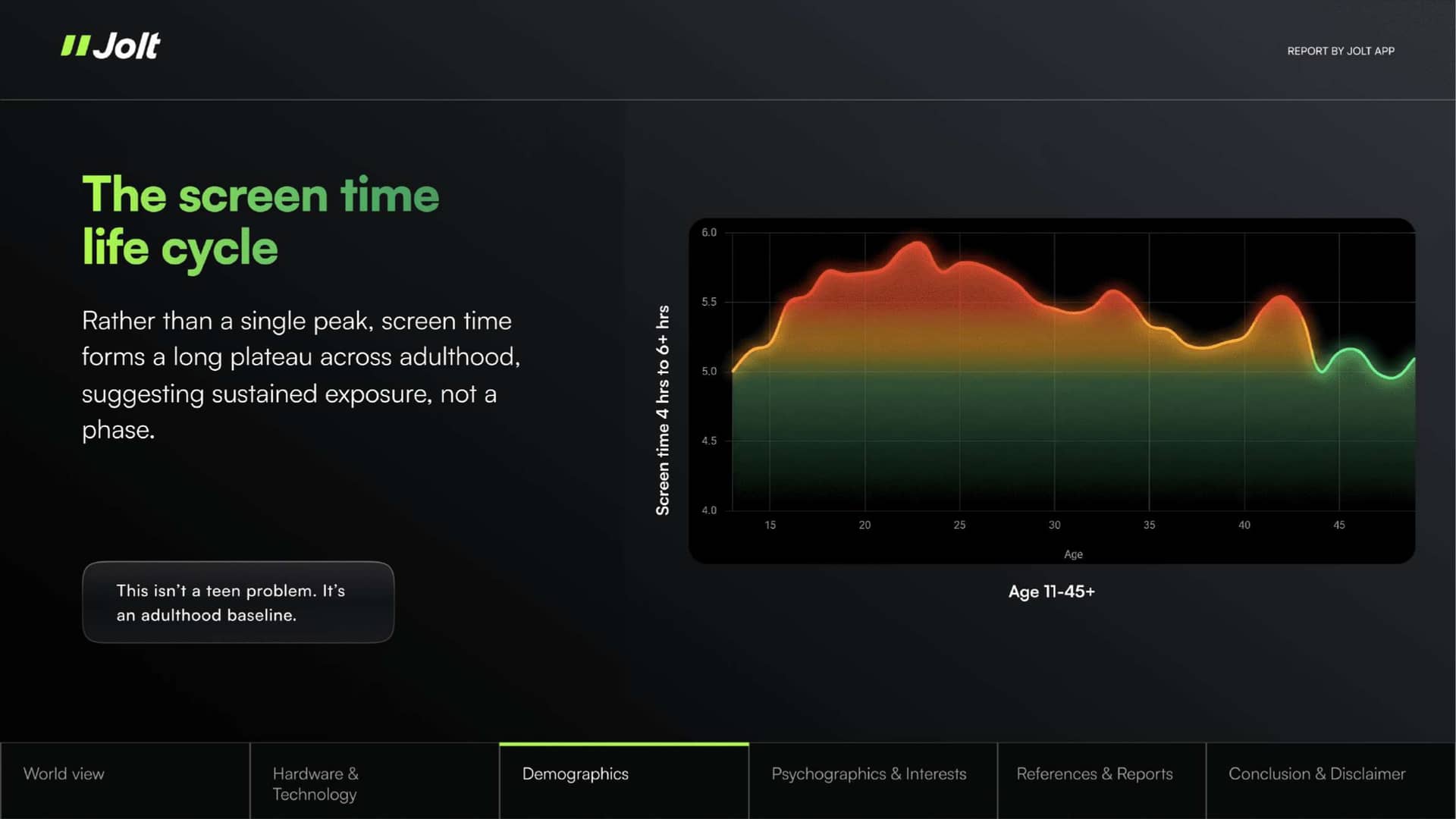
- •Screen time remains consistently high across adulthood, forming a long plateau rather than peaking only during teenage years.
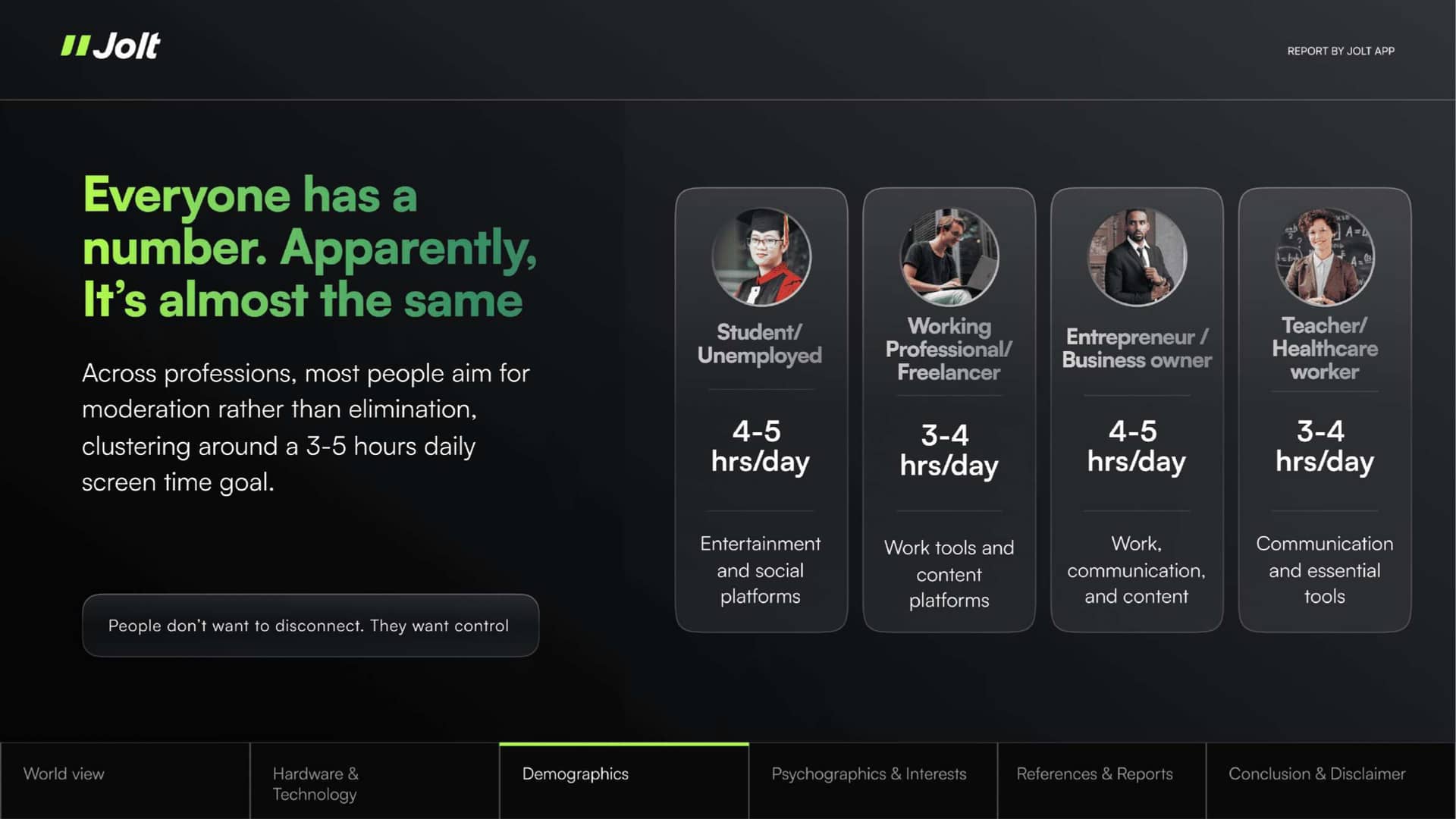
- •Work-related demands are a major driver of extended screen exposure across professions.
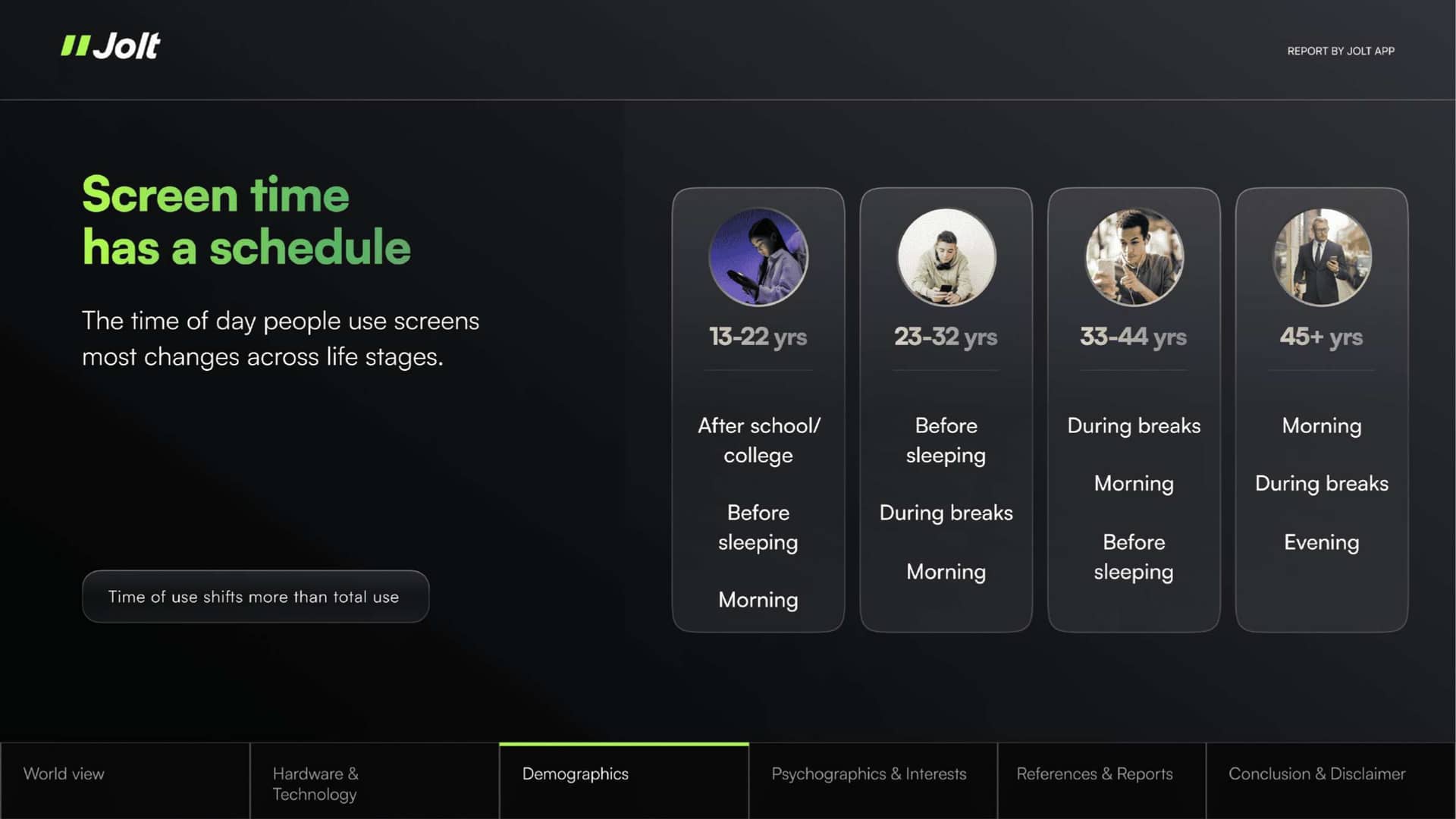
- •Phone use peaks most often during breaks and transition moments, indicating that idle time has increasingly become screen time.
Main Findings
Screen Time Has Become a Global Baseline
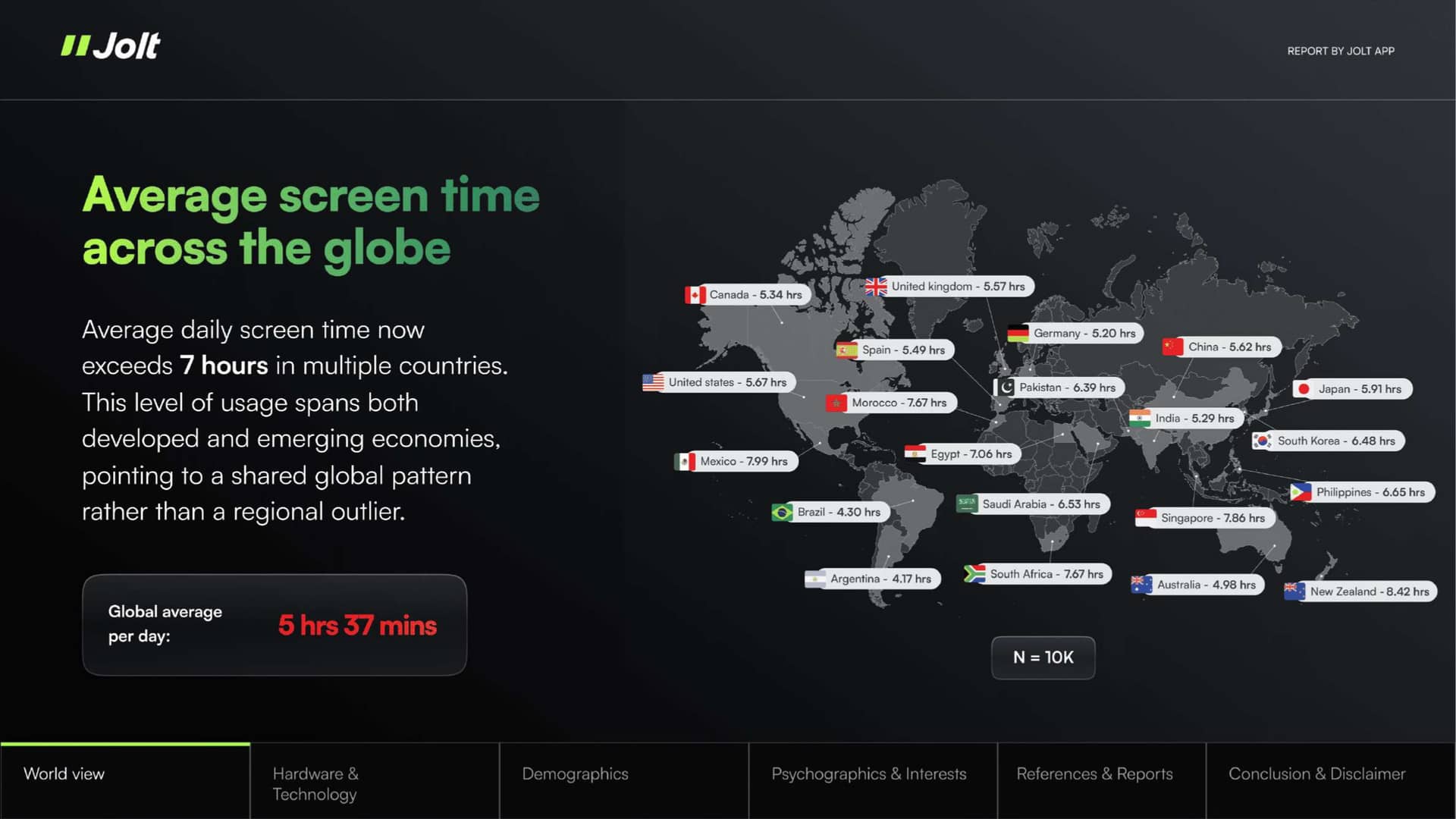
Screen Time by Country
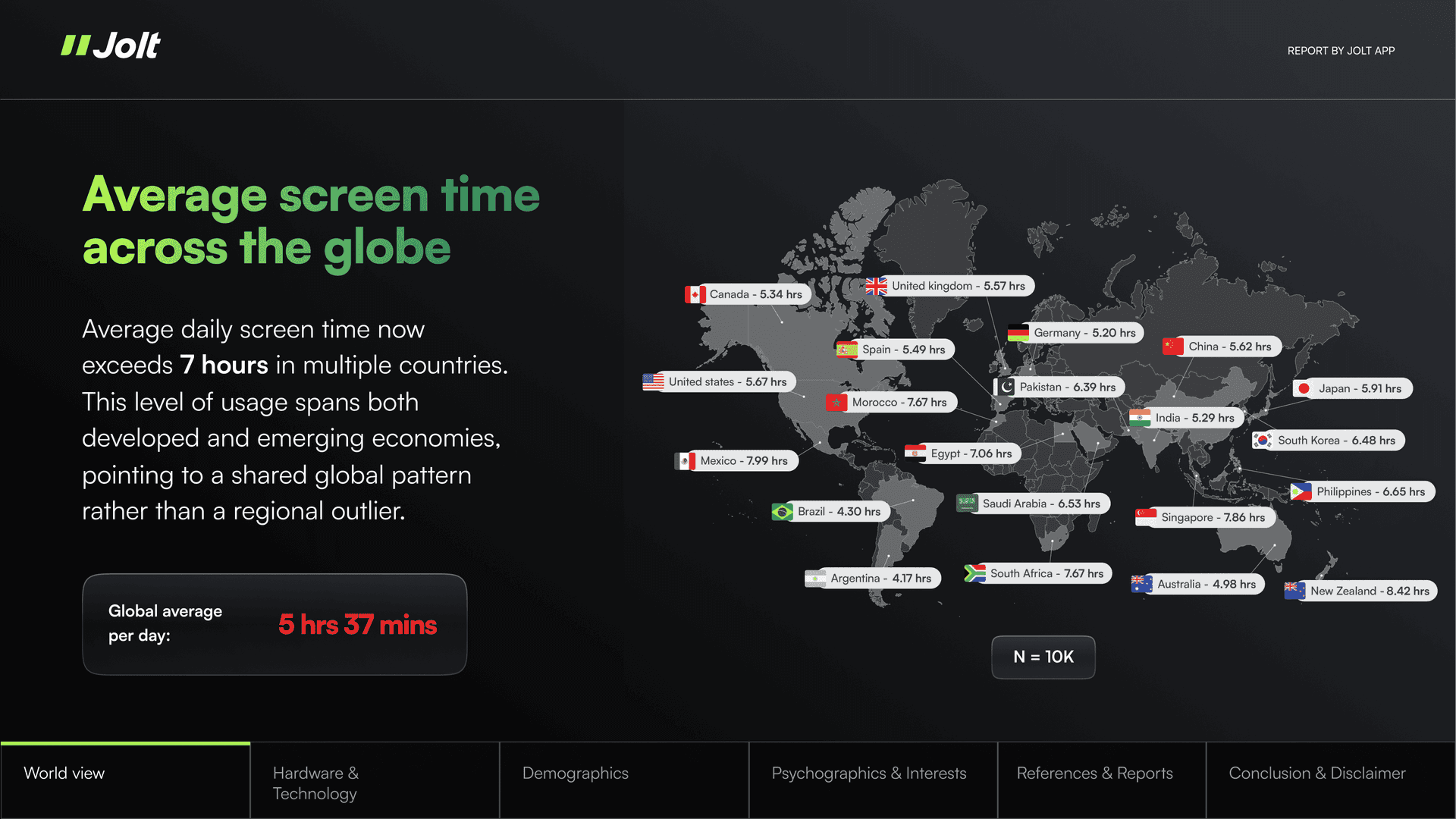
Average daily screen time exceeds seven hours in multiple countries across developed and emerging economies. This pattern appears globally, suggesting that heavy screen use is no longer a regional outlier but a shared behavioural norm.
Key data point:
Global average daily screen time: 5h 37m
People Know What Distracts Them - But Blocking Isn't Enough
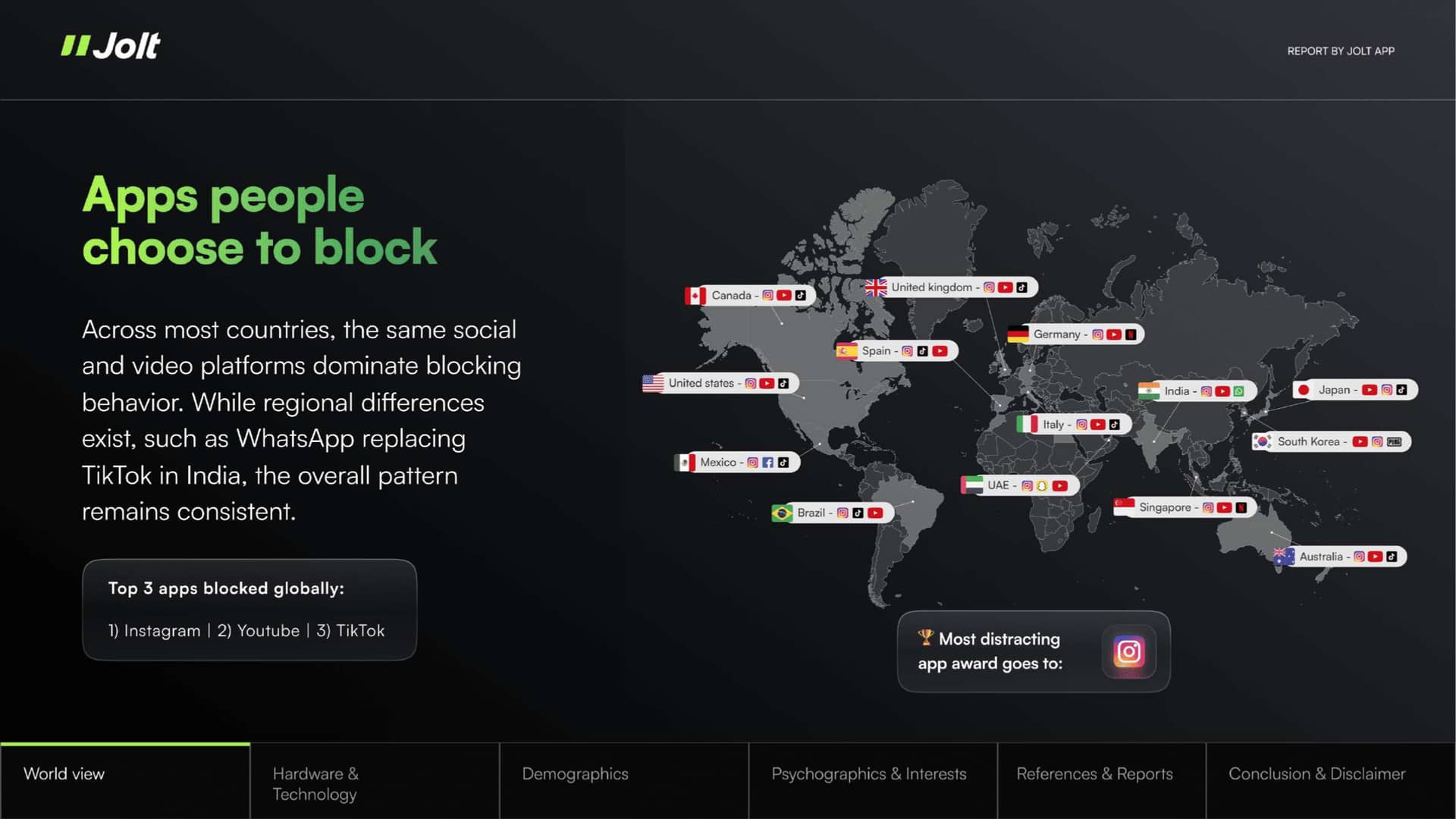
Apps People Choose to Block
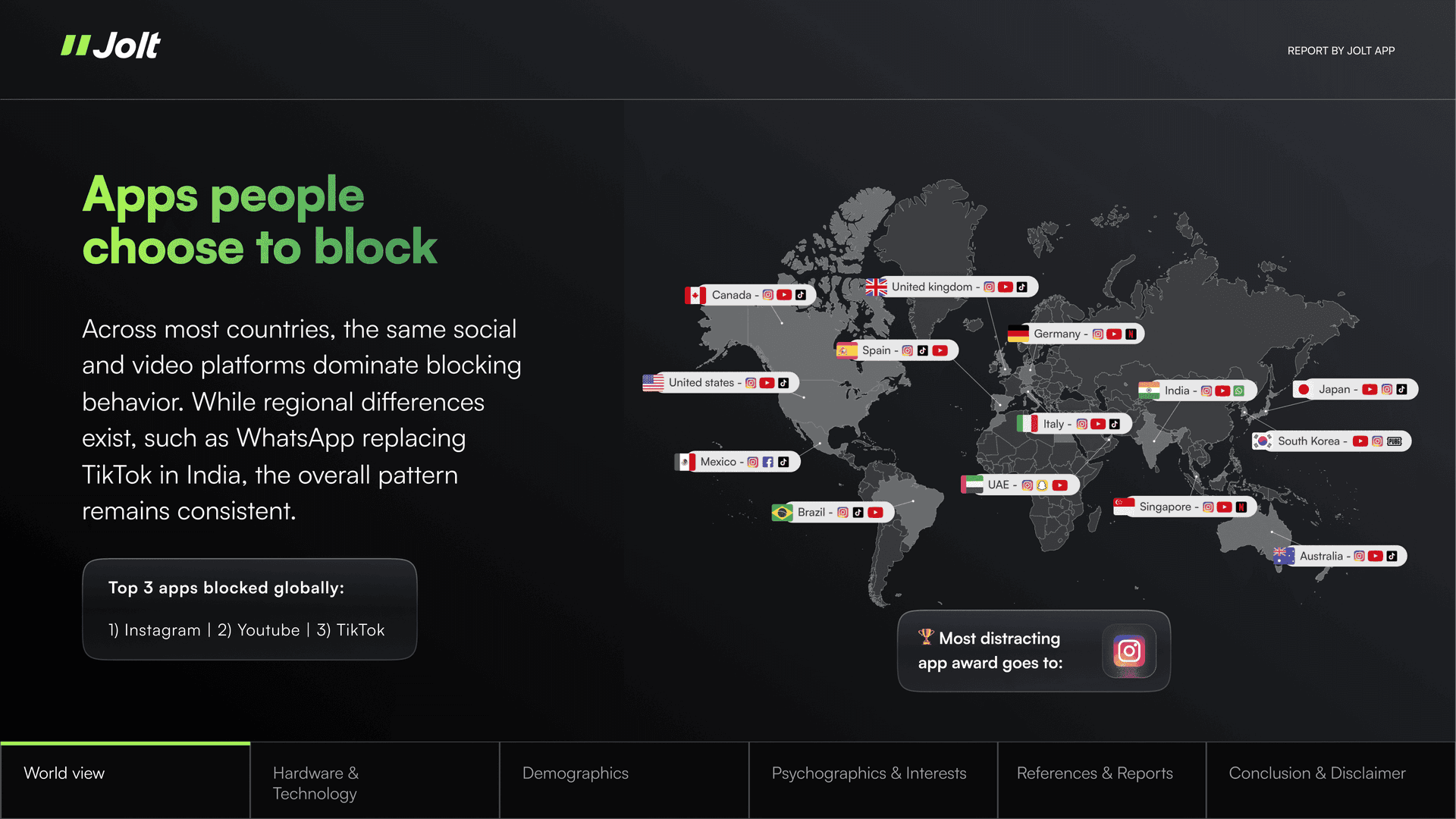
Across most countries, the same social and video platforms dominate blocking behaviour.
Top apps blocked globally
- 1. Instagram
- 2. YouTube
- 3. TikTok
Despite these actions, overall screen time remains largely unchanged, indicating that awareness alone does not meaningfully alter usage patterns.
This Is Not a Teen Problem - It's an Adulthood Pattern
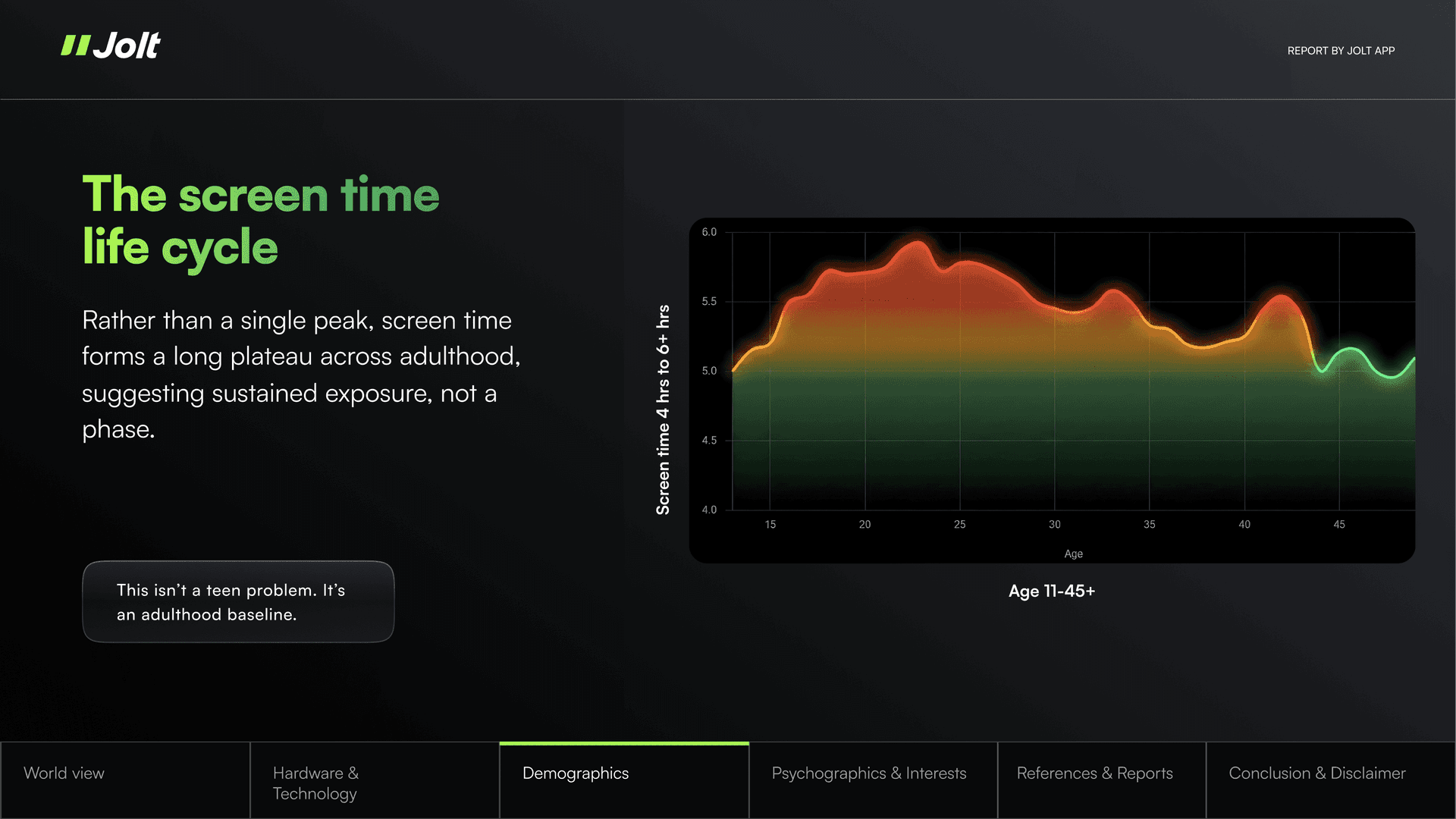
Screen Time Across Age Groups
Rather than peaking in adolescence and declining, screen time forms a long plateau across adulthood.
- • Sustained high usage from ages 11 to 45+
- • Typical daily screen time ranges from 4 to 6+ hours
This suggests prolonged exposure rather than a temporary life stage.
Work Has Become a Major Driver of Screen Exposure
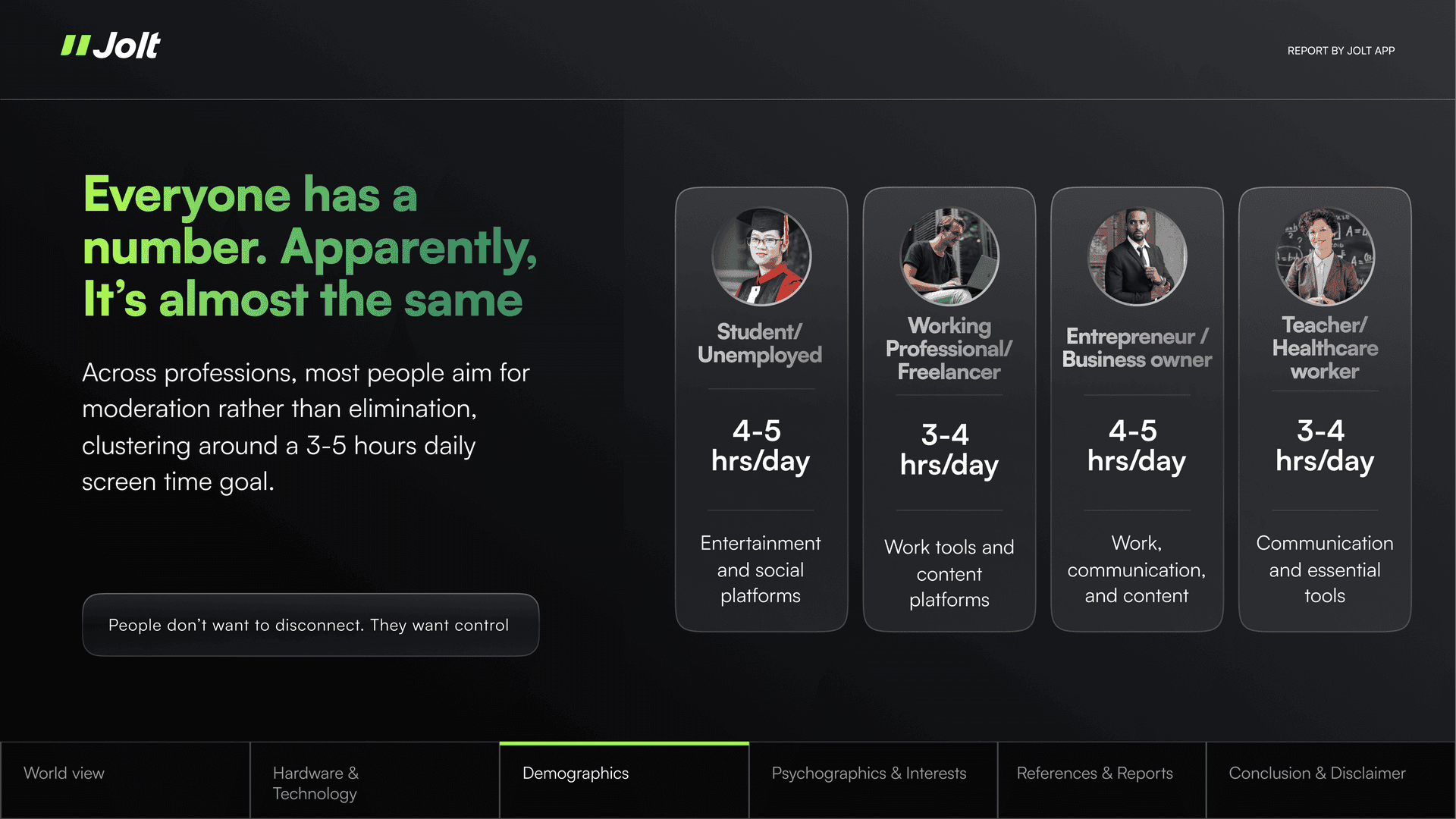
Screen Time by Profession
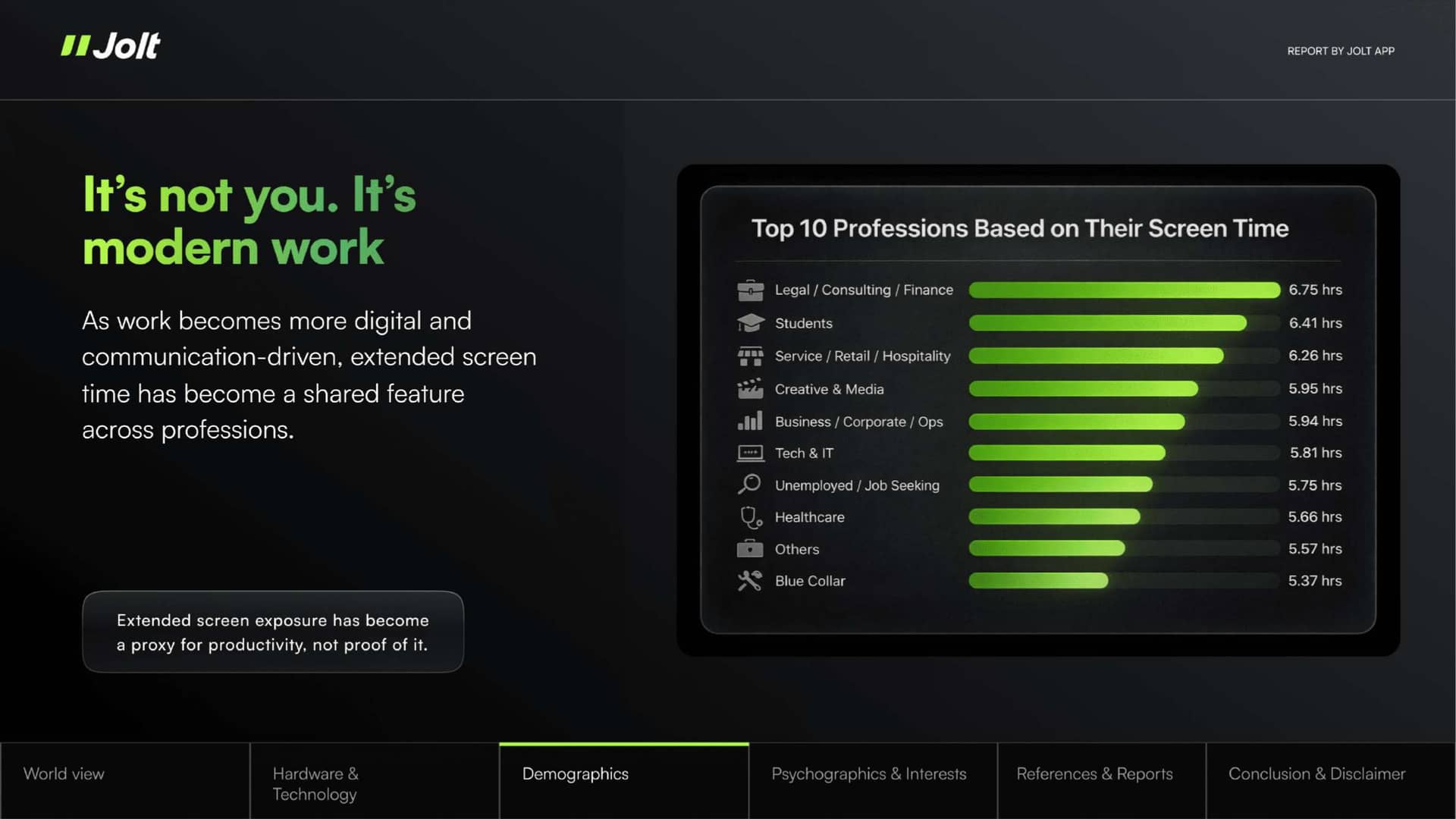
Extended screen time is closely linked to work demands and expectations of availability.
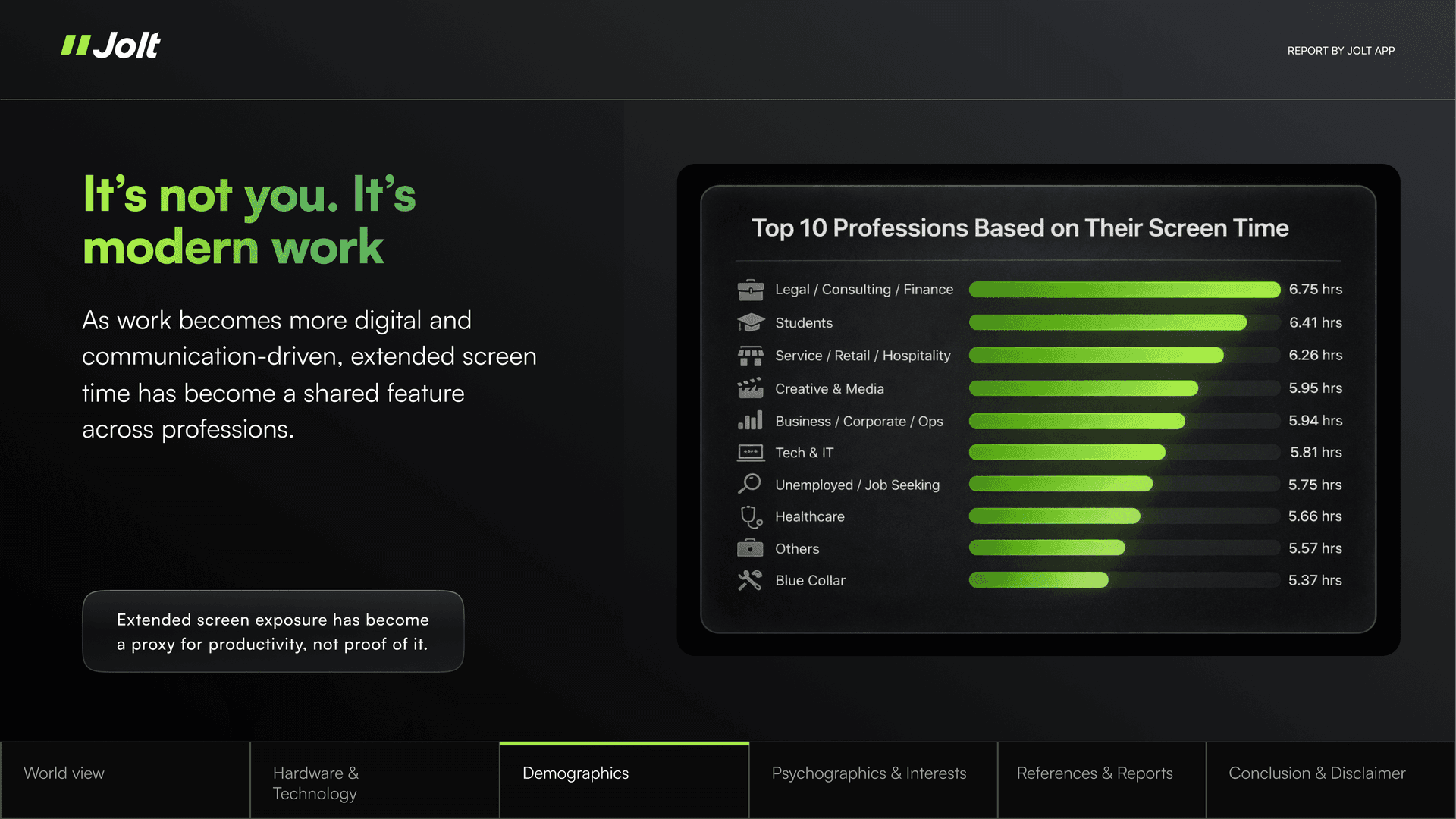
Professions with the highest daily screen time include:
- • Legal, consulting, and finance
- • Students
- • Service, retail, and hospitality
- • Media and creative roles
In many cases, screen exposure functions as a proxy for productivity rather than proof of it.
Better Devices Are Quietly Extending Screen Sessions
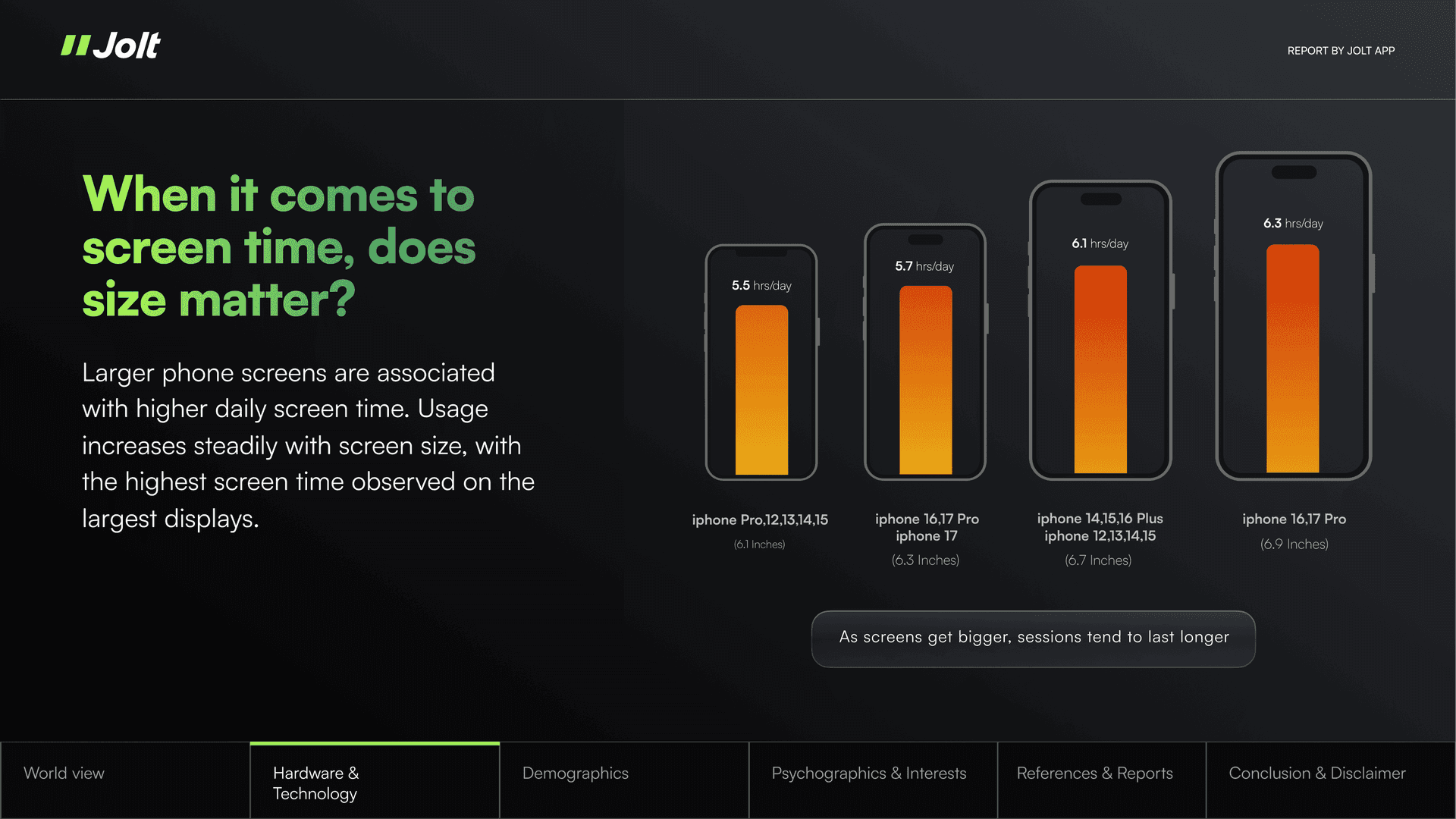
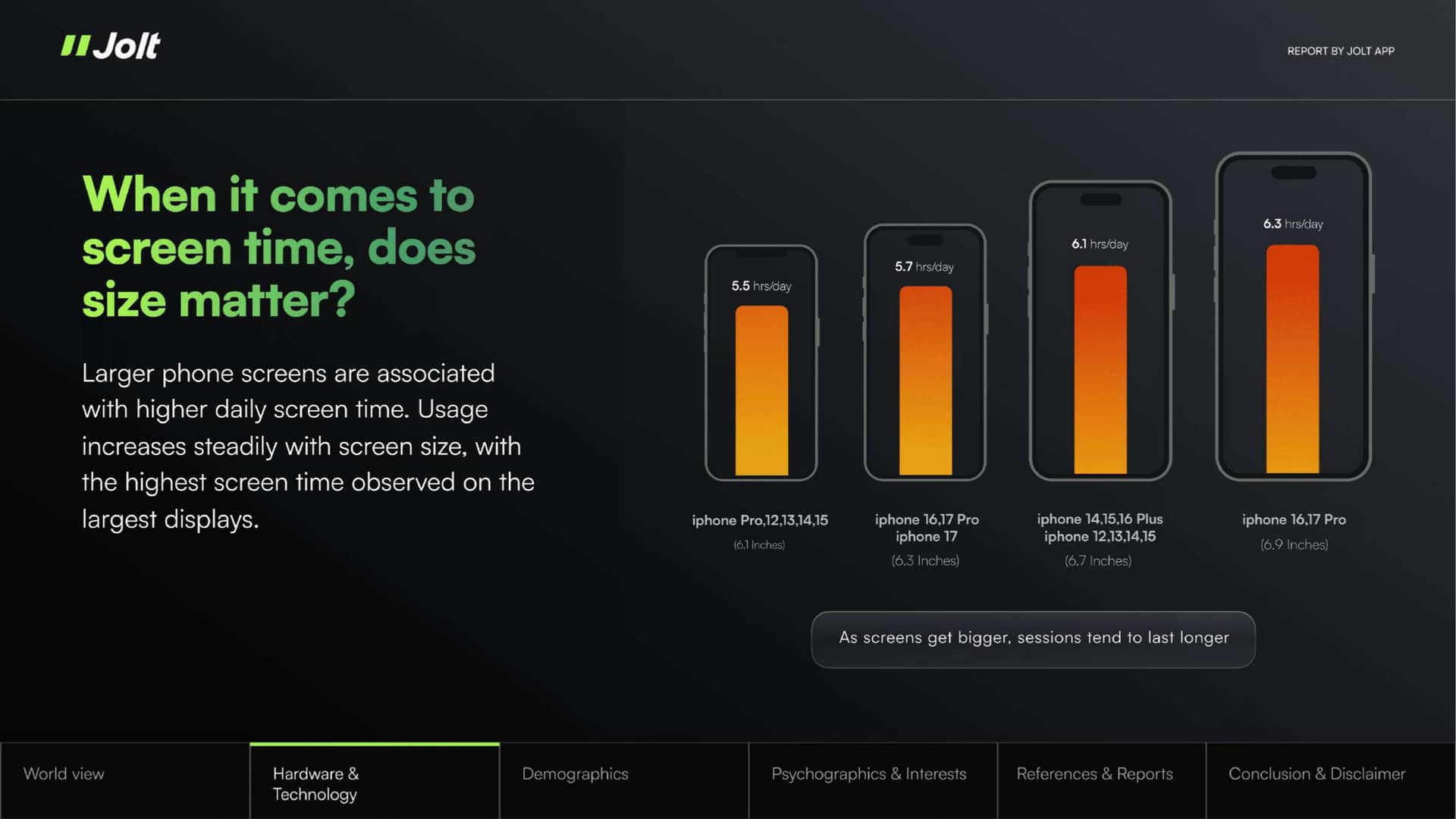
Hardware and Screen Duration
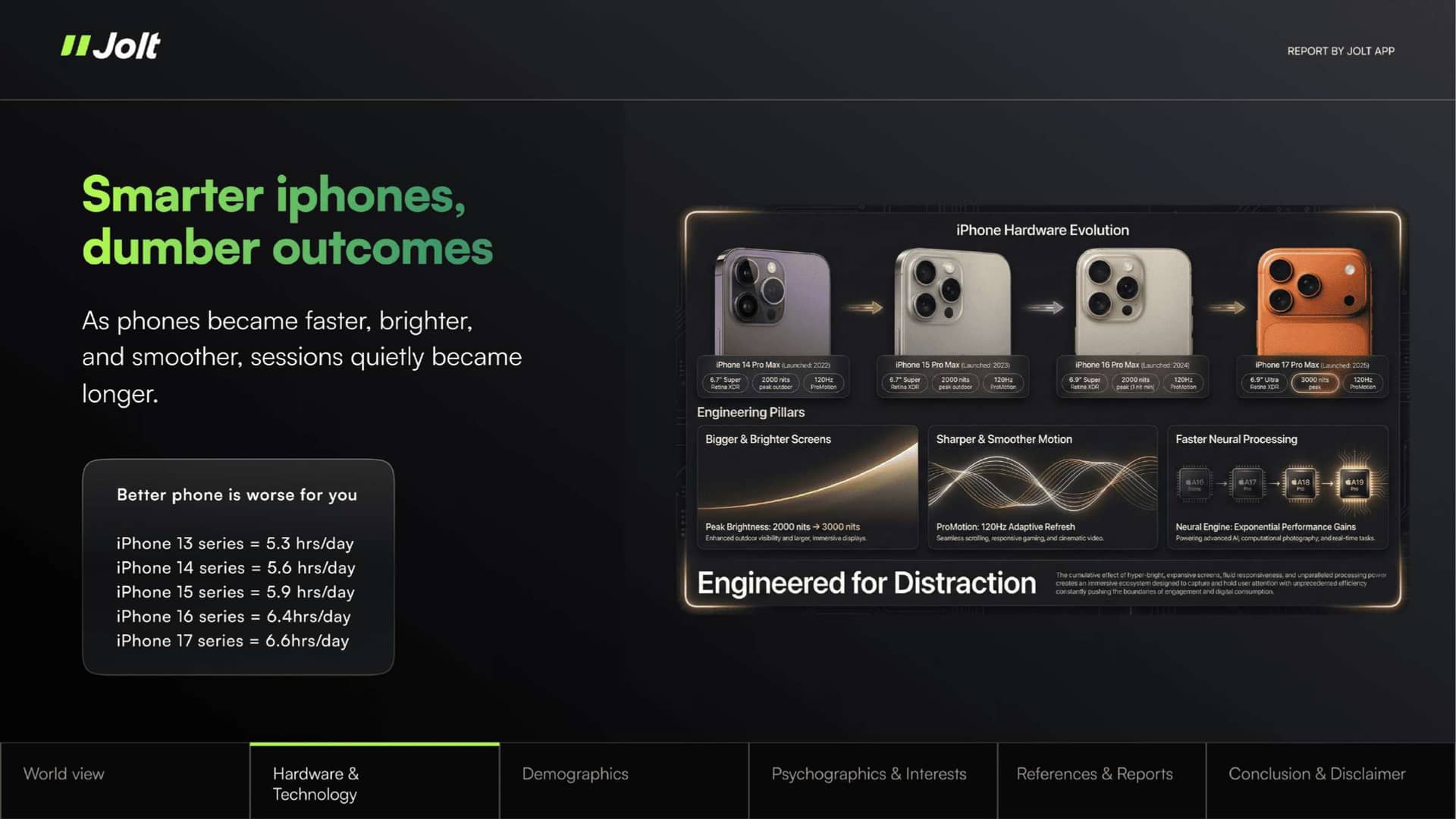
Newer smartphone generations are associated with longer daily screen sessions.
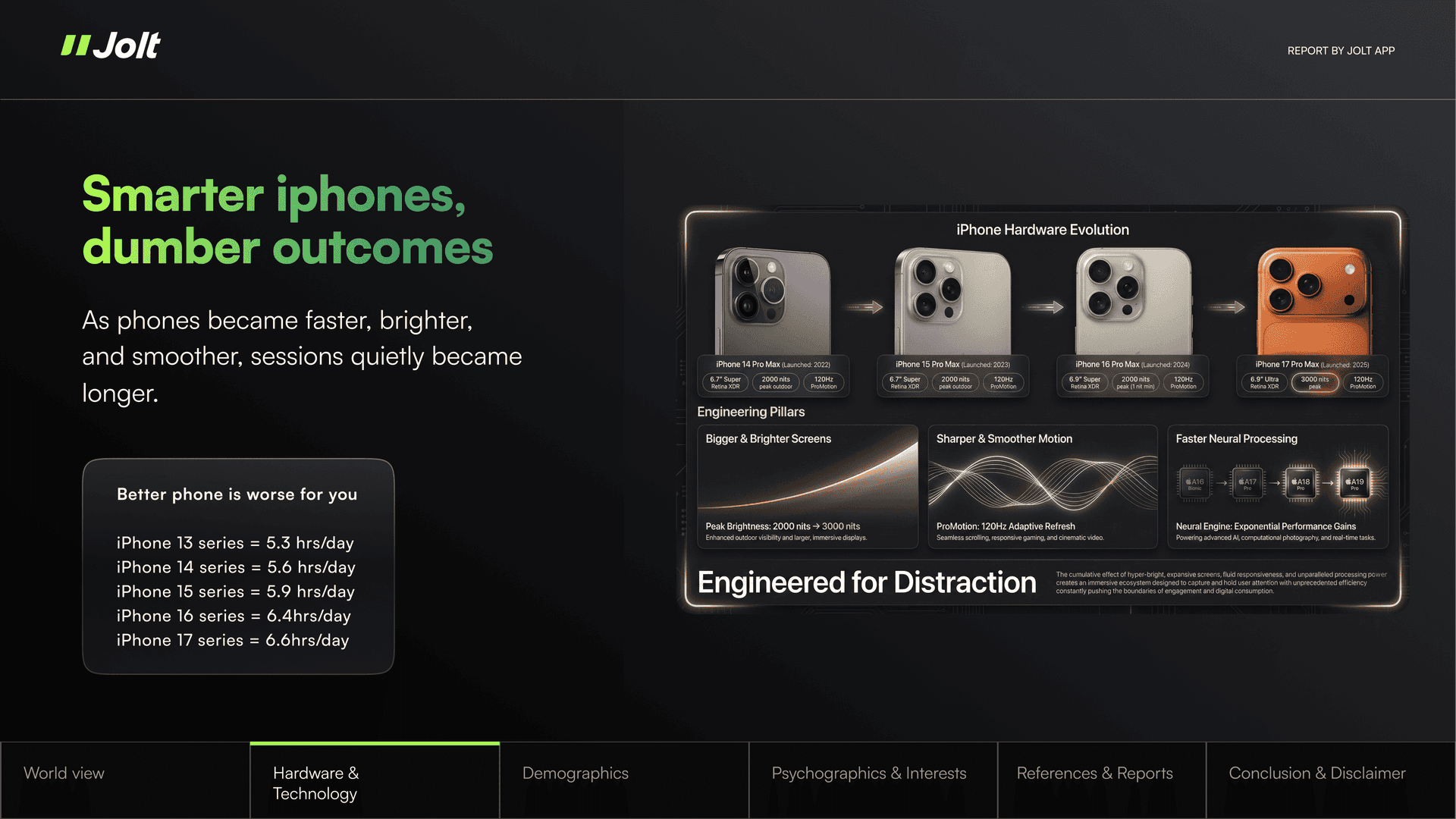
As phones become faster, brighter, and smoother, users tend to stay on their devices longer, even when the apps themselves remain largely unchanged. This highlights the role of hardware design in shaping attention.
When Rest Turns Into Scrolling
Screen Time by Daily Context
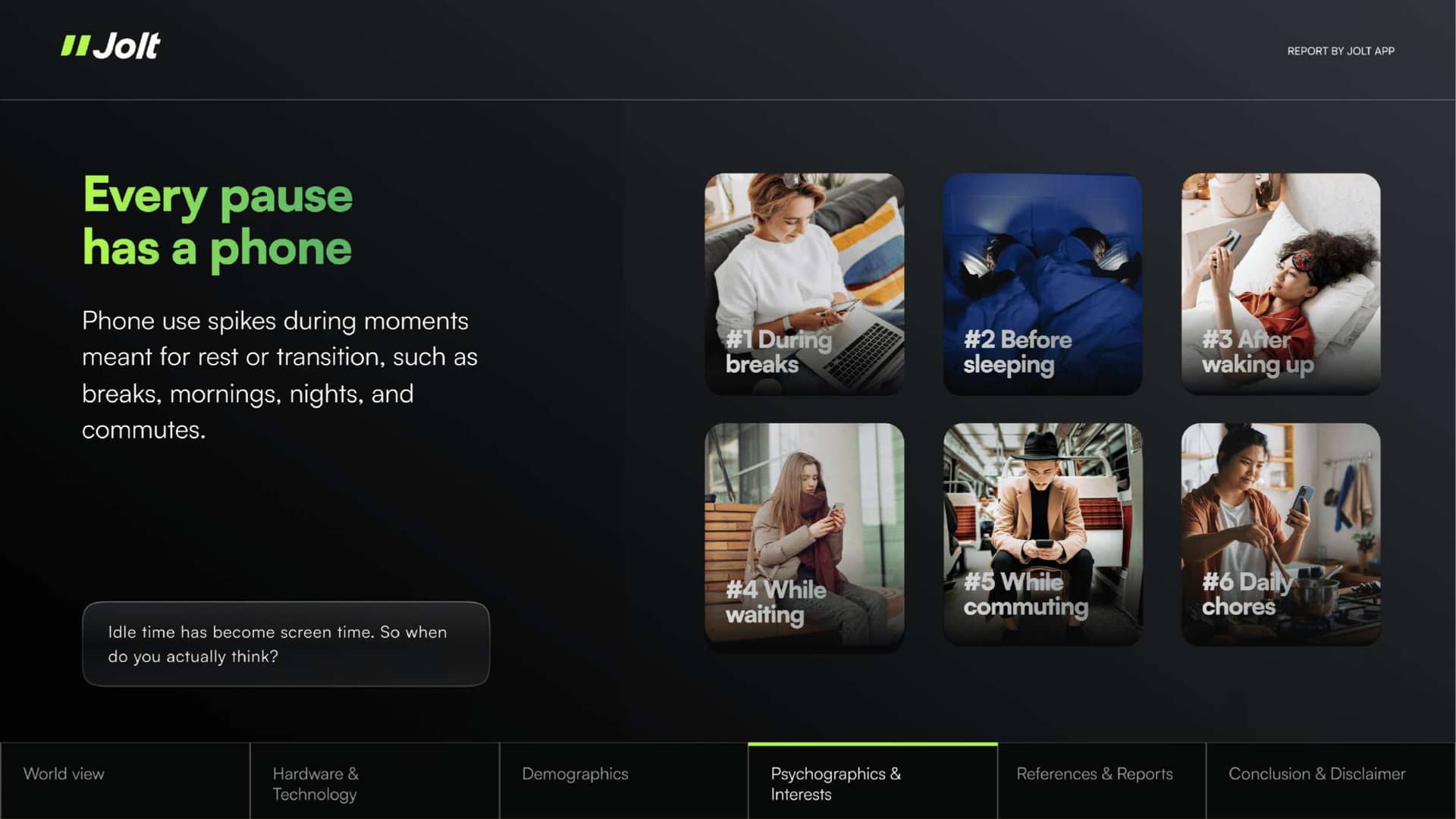
Phone use peaks most often during moments intended for rest or transition.
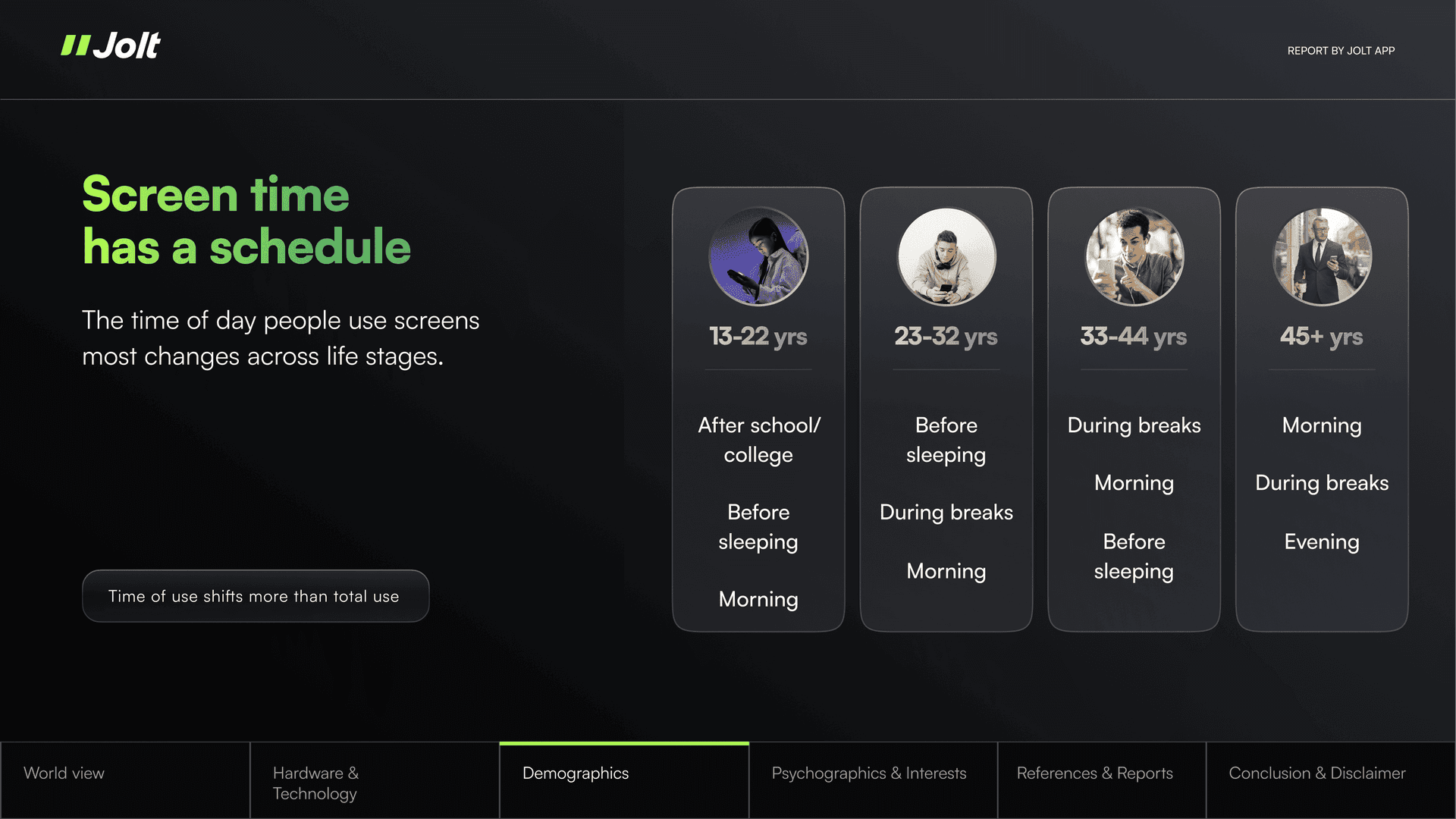
Most common screen-time moments
- 1.During breaks
- 2 Before sleeping
- 3 After waking up
- 4 While waiting
- 5 While commuting
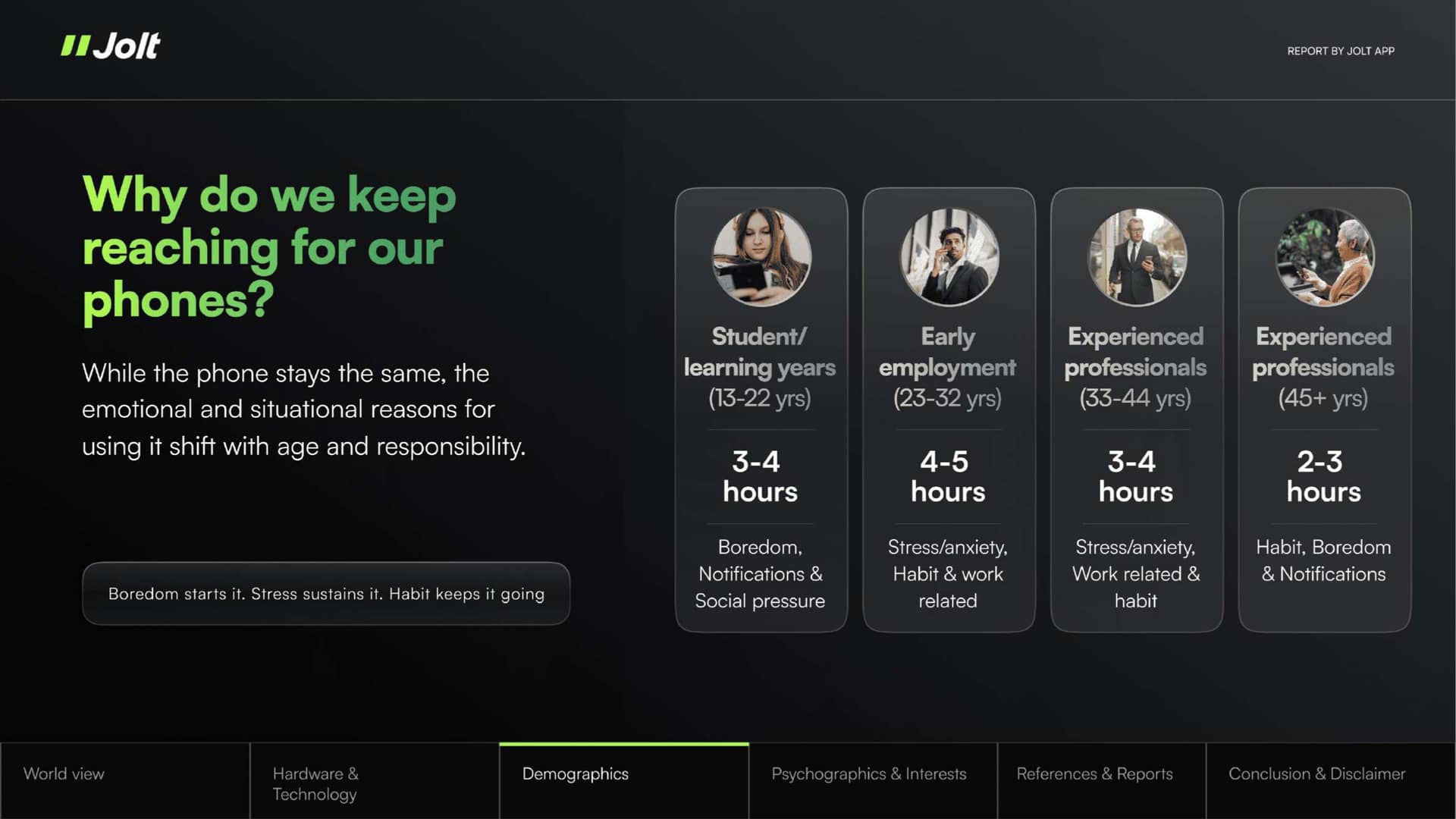
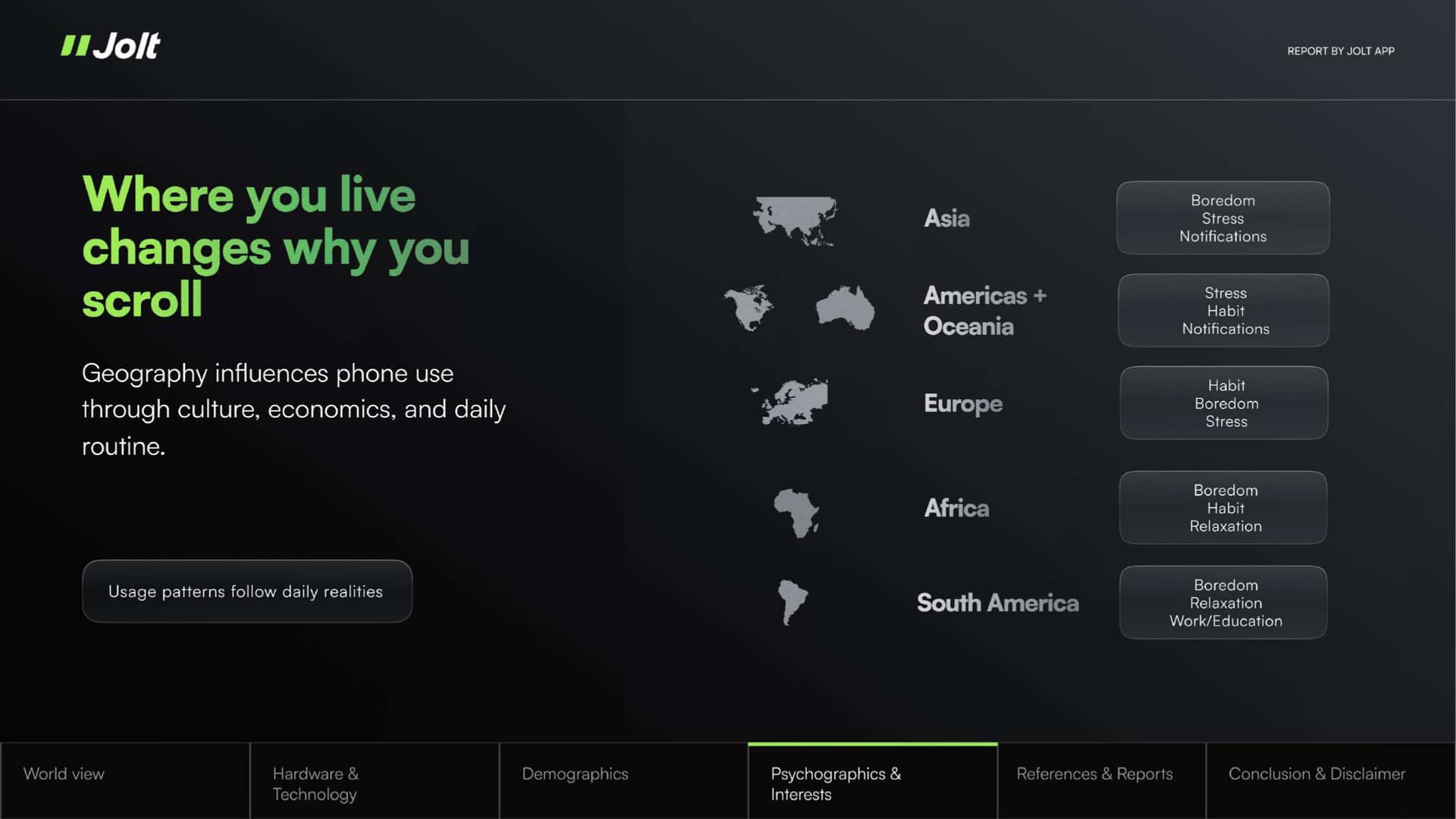
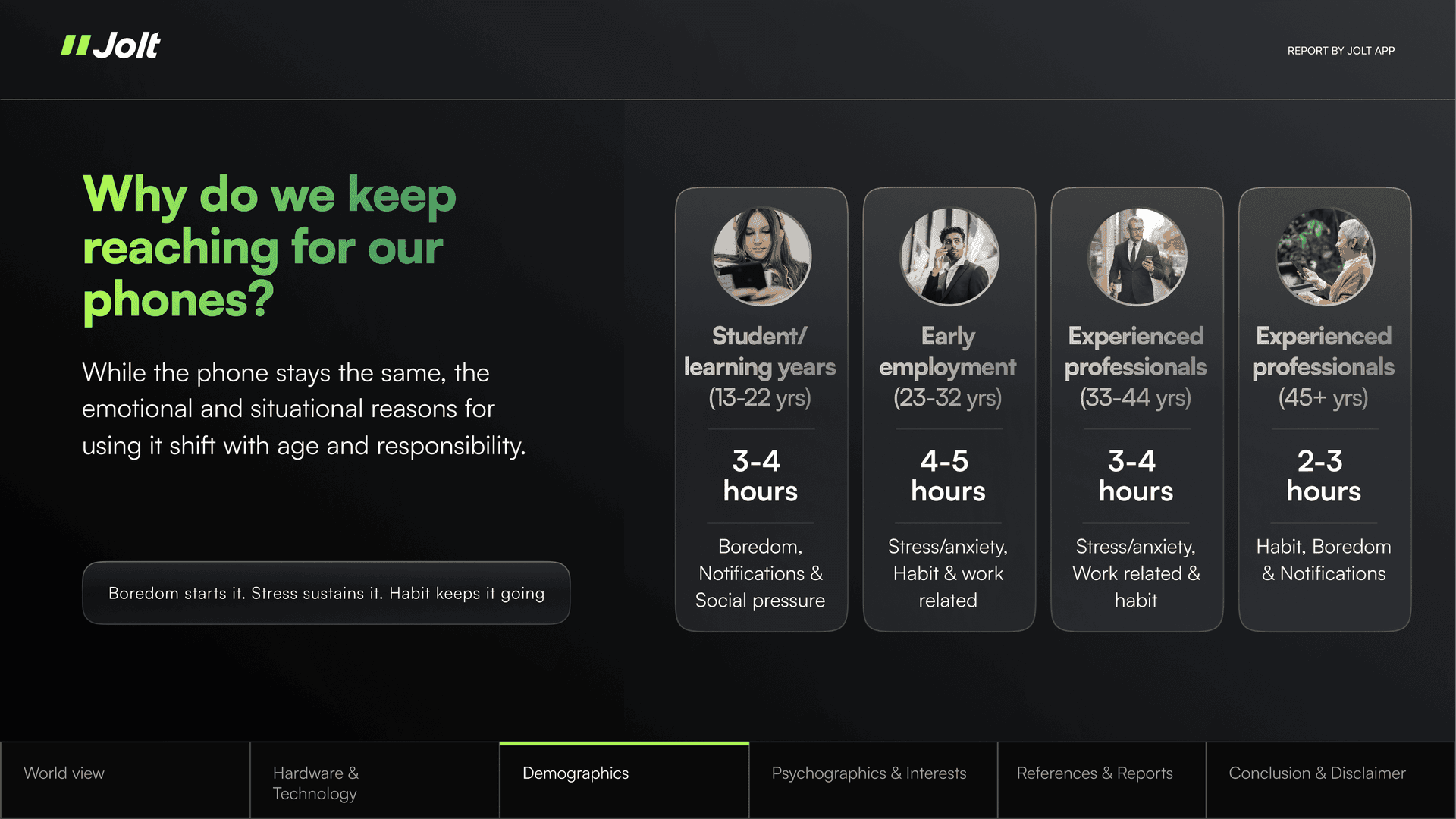
Across age groups, the same drivers recur:
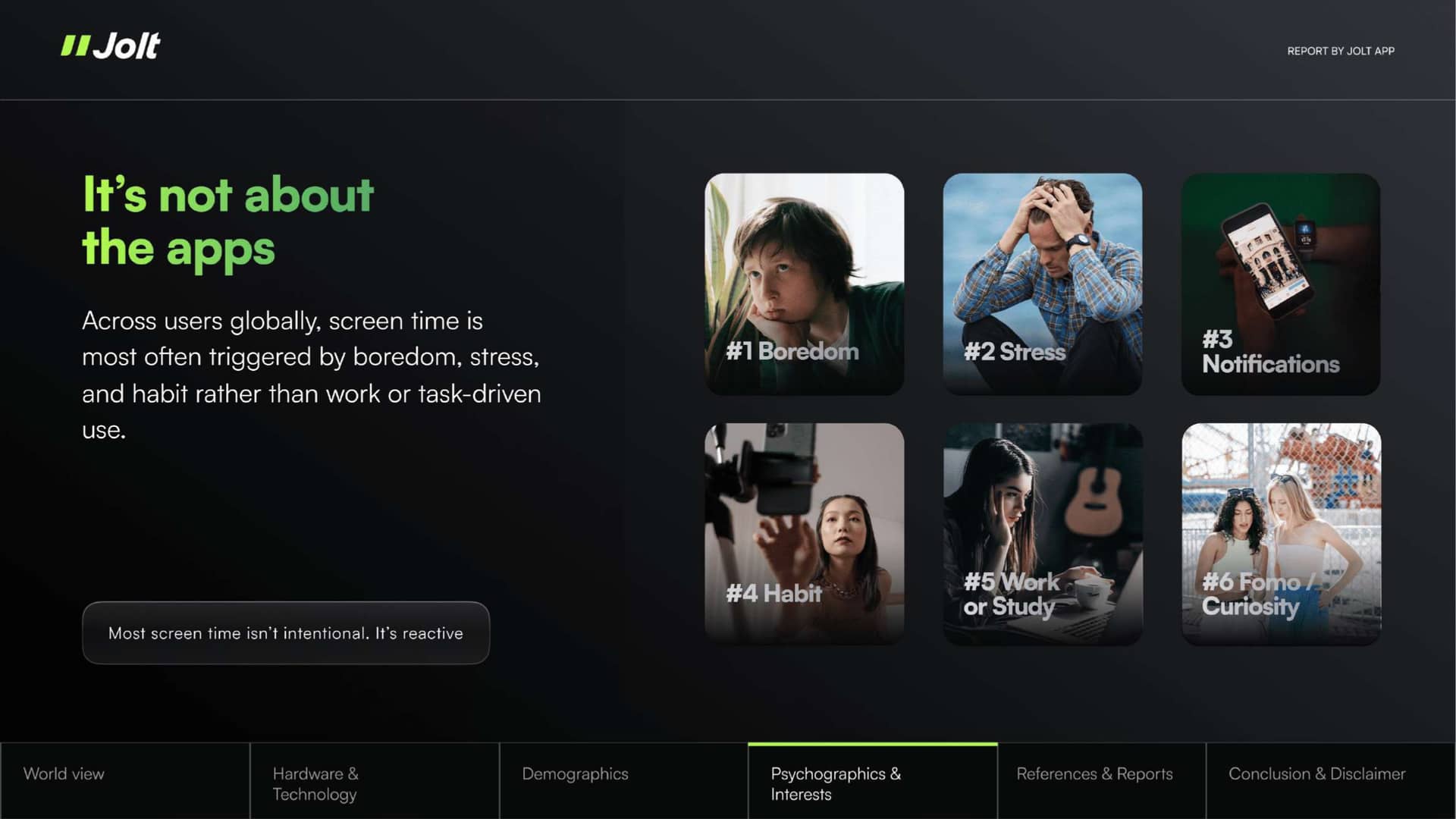
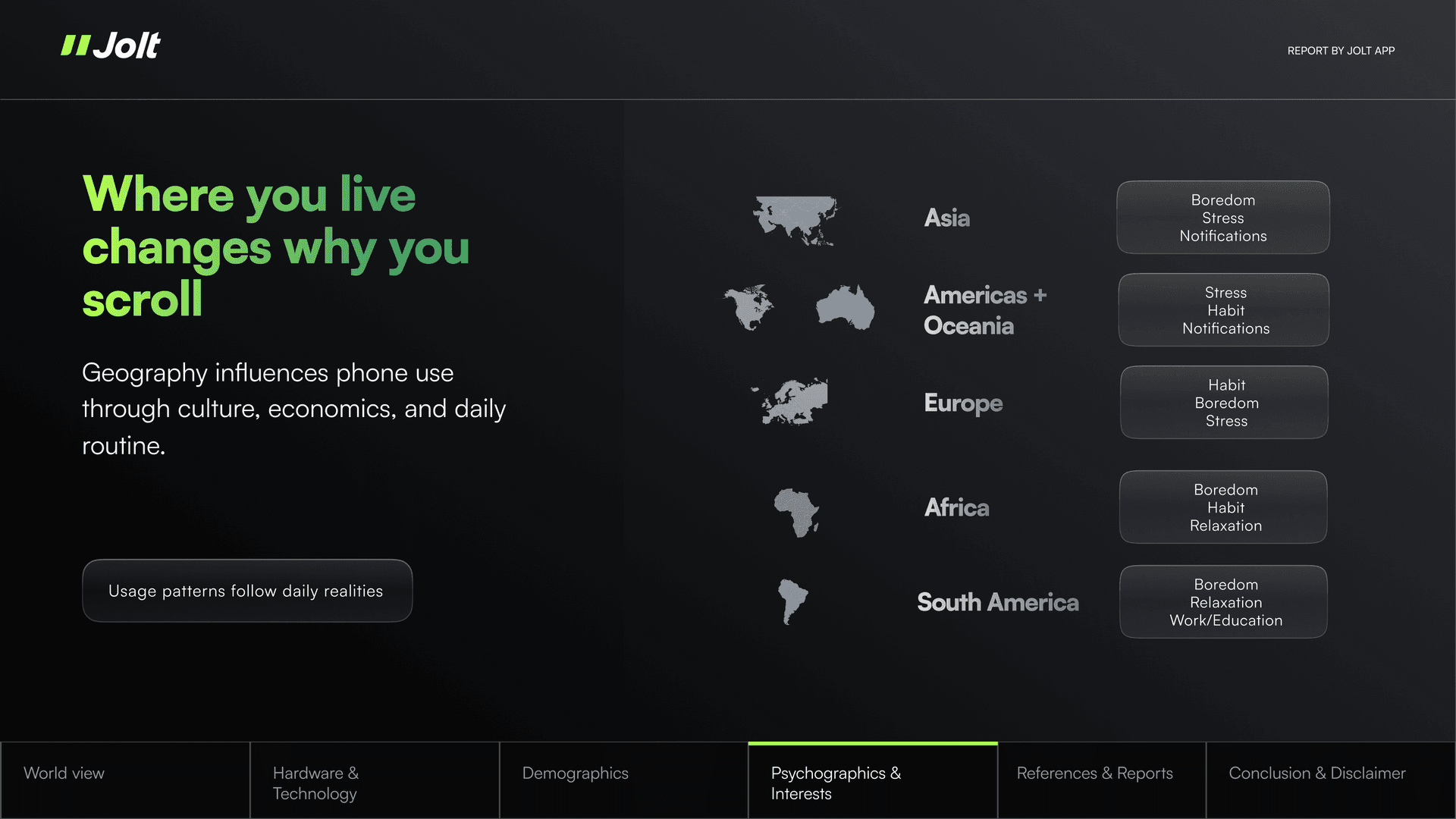
- • Boredom initiates phone use
- • Stress sustains it
- • Habit maintains it
Conclusion
The future risk is not simply more screen time. It is what screen time increasingly replaces — rest, focus, and recovery.
As digital devices become more deeply embedded in work and daily routines, attention is no longer shaped by individual choice alone, but by systems, expectations, and design.
Expert Commentary
Data like this is useful because it gives leaders a measurable view of how people actually operate day to day. The organisations that will perform best are the ones that protect recovery and deep work: fewer interruptions, clearer norms, and psychological safety to disconnect.
Attention is a resource shaped by context not just willpower. This kind of real-world data helps identify what consistently supports re-engagement, so people can build sustainable focus habits.
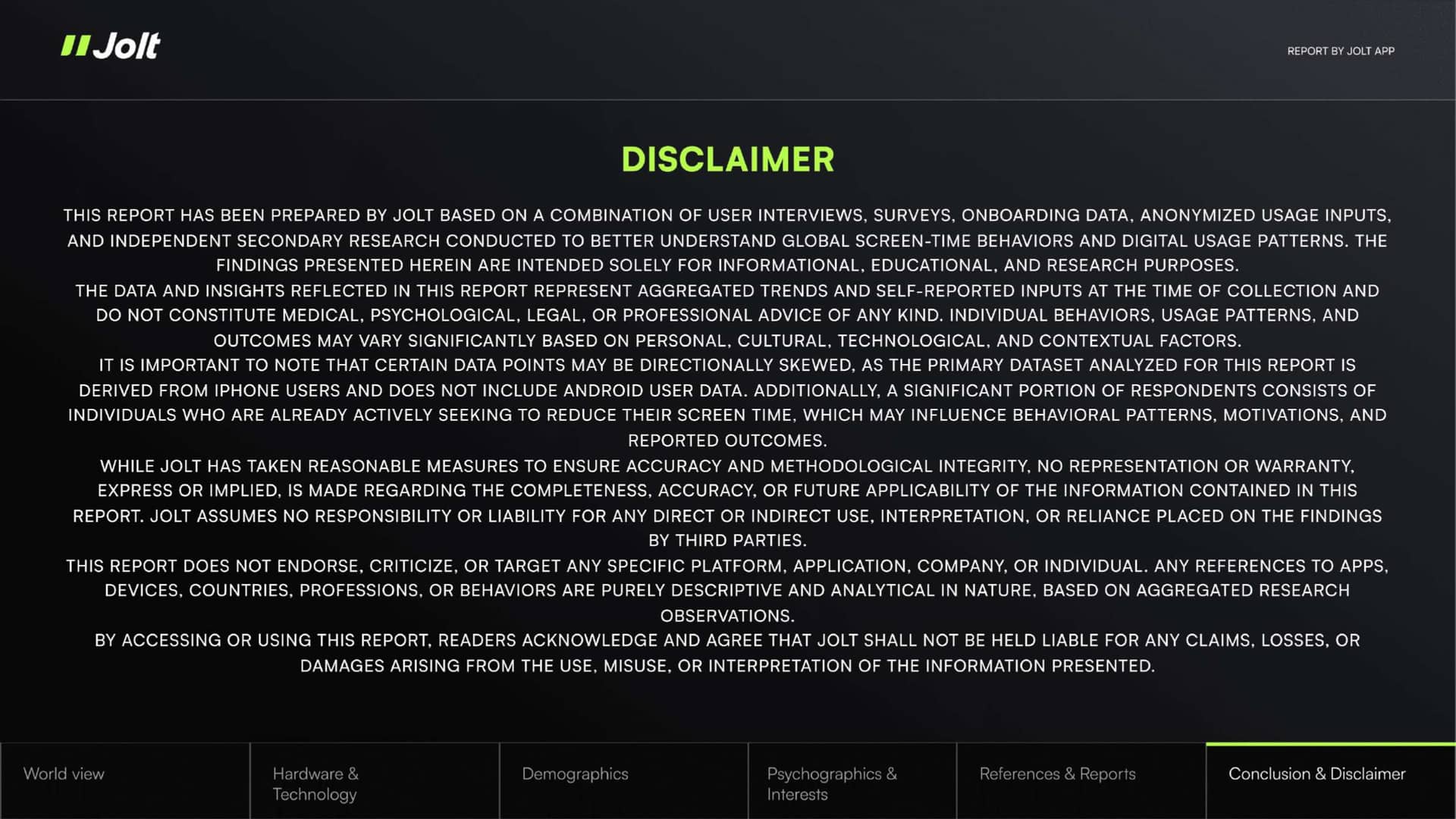
Methodology & Limitations
Sample size
Approximately 10,000 users
Data sources
Aggregated insights from anonymised app-usage data, user surveys, onboarding data, and interviews
Geographic scope
Global user base
Device scope
iPhone users only
Limitations
- • The dataset does not include Android users
- • A significant portion of participants were already interested in understanding or reducing their screen time
- • Findings are descriptive and directional, not diagnostic or predictive
Purpose
This research is intended for informational and educational purposes only and does not constitute medical, psychological, or professional advice
Take charge of your time with Jolt
Your time is your power. Start building focus, shaping better habits, and achieving your goals today with Jolt. Take the first step now.
 Take charge of your time