Importance of Deep Sleep
6-minute read
Overview: Deep sleep is your body’s reset phase, driving recovery, immunity, and mental clarity. But balance matters, too much can leave you groggy, too little harms focus and daily performance. Consistent routines & a calm sleep environment help optimize your cycle, so you wake refreshed, recharged, and ready to perform at your best every day.
What Is Deep Sleep, and How To Increase Deep Sleep Naturally?
Maintain a consistent sleep routine and healthy habits to improve your overall sleep quality.
- Go to bed and wake up at the same time every day
- Aim for 7–9 hours of sleep each night
- Limit screen time before bed, as blue light reduces melatonin
- Exercise regularly, preferably earlier in the day
- Avoid caffeine and heavy meals late at night
- Keep your sleeping environment calm, dark, and quiet
- Practice relaxation techniques like meditation or deep breathing
What Happens During Deep Sleep?
What if your body had a secret repair mode that only turns on at night? That’s exactly what happens during deep sleep, the most restorative stage of your sleep cycle. In this stage, brain activity slows, while your body repairs damaged tissue, builds muscle, and boosts immune defenses. Growth hormone is released, helping with recovery and development.
At the same time, your brain processes and consolidates memories, improving learning and focus. Heart rate and breathing become steady, allowing true relaxation. Since the body is resting so deeply, being awakened at this point may feel hard and leave you confused.
What Is the Optimal Sleeping Temperature?
Cool nights, deeper dreams, that’s the secret to perfect sleep. The optimal sleeping temperature for most people lies between 16–20°C (60–68°F), aligning with how your body naturally cools before sleep. Research shows that as bedtime approaches, your core temperature drops and blood flow increases to your hands & feet, helping you fall asleep faster
(NIH study on thermoregulation and sleep).A large study also found that even a 1°F increase above this range can slightly reduce sleep efficiency and duration
(Sleep journal research summary). Keeping your room cool supports deeper, uninterrupted sleep and overall well-being.
How Jolt Reinforces Better Sleep
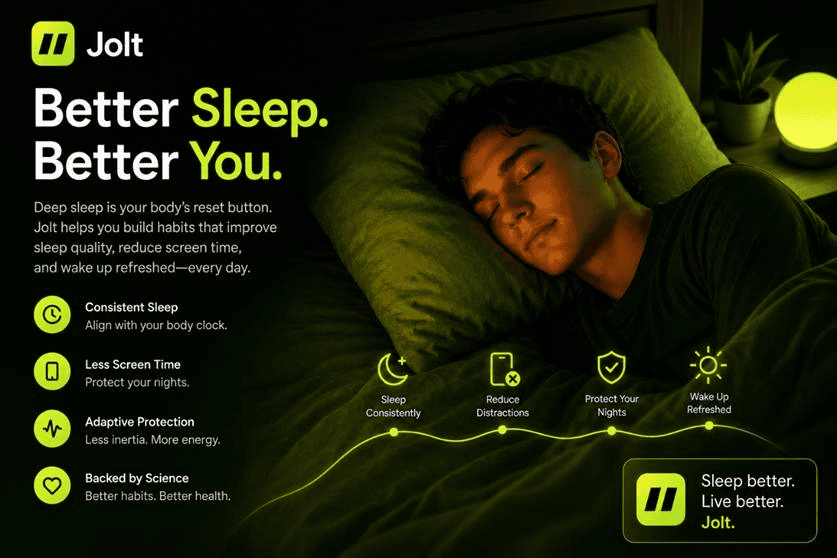
Better sleep starts with small systems that quietly guide your body back to balance. Jolt supports this by reinforcing consistent sleep timing, aligning with circadian rhythm science.
Instead of rigid restrictions, it uses behavioral nudges backed by neuroscience to build consistency. Over time, this structured approach improves sleep regularity. Research shows it is as important as sleep duration for long-term health. It also supports recovery.
FAQs
Too much deep sleep causes
Too much deep sleep can sometimes lead to grogginess, fatigue, and difficulty waking up, especially if it disrupts the natural sleep cycle. While deep sleep is essential for recovery, excessive amounts may indicate underlying health issues or poor sleep quality, leaving a person feeling tired rather than refreshed during the day.
Why do I feel better with less sleep?
There are several reasons why getting less sleep can make you feel better. Shorter sleep periods can sometimes keep you in line with lighter sleep stages, allowing you to wake up feeling more awake rather than drowsy from deep sleep. Fatigue can also result from oversleeping since it throws off your body clock. Consistently requiring less sleep, however, could be an indication of stress, lifestyle issues, or poor sleep quality.
What happens when you don't get enough deep sleep?
Feeling better with less sleep usually comes down to sleep timing and quality, not just quantity. If you wake up during a lighter sleep stage, you feel refreshed. But waking from deep sleep can cause grogginess (sleep inertia), making longer sleep feel worse.
Also, oversleeping can disrupt your body clock, leading to fatigue. Stress, irregular schedules, or poor-quality sleep can make shorter sleep feel better temporarily, even if your body still needs proper rest long-term.
Conclusion:
Quality sleep matters more than time in bed. Deep sleep restores energy, strengthens immunity, and sharpens focus, but balance is key, too much or too little disrupts comfort. Consistent routines, a calm environment, and syncing with your body clock turn sleep into a powerful daily boost for health and clarity.
Reference:

 Download Now
 Take charge of your time