How to Stop Using Your Phone So Much: 7 Practical Ways That Actually Work
Many people feel the same frustration. You pick up your phone for one small reason. Then 20 minutes pass. You ask yourself, How to stop using the phone so much?
This question is becoming common. Smartphones are helpful tools, but they are also designed to capture attention. The problem is not just lack of discipline. It is about habit loops, brain chemistry, and environment design.
Let us understand what is happening and what truly works.
Why Is It So Hard to Put the Phone Down?
A study by Asurion found that the average person checks their phone
96 times per day. That is once every 10 minutes.
This behaviour is not random.
Each notification, like, or message releases dopamine in the brain. Dopamine creates a small pleasure signal. When this happens repeatedly, the brain forms a habit.
The loop looks like this:
Cue → Pick up phone → Scroll → Dopamine reward → Repeat
To stop using the phone so much, we must break this loop.
The Real Cost of Excessive Phone Use
Here is a simple impact matrix based on behavioural and psychological studies:
| Area of Life | Effect of Heavy Phone Use |
|---|
| Productivity | Reduced deep focus and slower work completion |
| Sleep | Delayed sleep due to blue light exposure |
| Mental Health | Increased stress and comparison anxiety |
| Memory | Lower information retention |
| Relationships | Reduced face-to-face engagement |
Research from the University of California shows that after an interruption, it takes about 23 minutes to regain full focus.
If you interrupt yourself multiple times daily, your productivity drops significantly.
7 Practical Ways That Actually Work
These strategies are based on behavioural science and real-world application.
1. Track Your Screen Time Honestly
Most people underestimate their phone usage.
Start by checking your daily screen time report for one week. Do not judge it. Just observe it.
Awareness changes behaviour. When you see the real number, your brain becomes more conscious of the habit.
Self-monitoring alone can reduce unwanted behaviour by up to 20 percent.
2. Turn Off Non-Essential Notifications
Notifications are powerful triggers.
Every alert creates a small mental pull. Even if you ignore it, your focus is disturbed.
Disable notifications for social apps, shopping apps, and entertainment apps. Keep only essential alerts.
Reducing triggers weakens the habit loop.
3. Create Phone-Free Zones
Do not keep your phone next to your bed. Do not place it on your work desk during focus time.
Simply having your phone visible reduces cognitive capacity.
Physical distance improves mental clarity.
4. Use Time Blocks for Focus
Work in focused sessions of 30 to 45 minutes. During this time, keep social apps blocked or your phone in another room.
Deep focus strengthens attention like a muscle.
Over weeks, your brain adapts to longer periods of concentration.
5. Replace the Habit, Do Not Just Remove It
When boredom or stress appears, you automatically reach for your phone.
Instead of removing the phone without replacement, change the routine.
Examples:
- Stretch for one minute.
- Take three deep breaths.
- Drink water.
- Walk briefly.
You must replace the scrolling action with another small action.
6. Reduce Late-Night Usage
Blue light reduces melatonin, which delays sleep.
Set a fixed time at night when you stop using social apps. Even stopping 45 minutes before sleep improves rest quality.
Better sleep improves focus and mood.
7. Use Digital Boundaries, Not Willpower Alone
Willpower fades when you are tired.
Systems are stronger than motivation.
Using tools that track screen time, set app limits, and block distractions during work hours creates structure. When apps become temporarily inaccessible, impulsive checking decreases.
Behavioural science shows that increasing friction reduces automatic behaviour.
Structure supports long-term discipline.
What Happens When You Reduce Phone Use?
Within a few weeks, many people report:
- Stronger focus
- Faster task completion
- Improved sleep
- Reduced stress
- More meaningful real-life conversations
Attention improves because it is being trained again.
The brain adapts to what it practises.
If it practises constant scrolling, distraction increases.
If it practises structured focus, clarity improves.
A Realistic Mindset
The goal is not to eliminate phones completely.
Phones are tools for work, communication, and learning.
The goal is balance.
When phone use becomes intentional instead of automatic, you regain control.
If you are constantly asking, How to stop using the phone so much, the answer is not extreme detox. The answer is small daily systems that weaken the habit gradually.
Consistency matters more than intensity.
How Jolt Helps You Break the Phone Habit
Reducing screen time is difficult when your phone is always within reach. The problem is not only habit. It is design.
Apps are built to keep you engaged. That is why simple promises like “I will use my phone less” often fail. Real change needs structure.
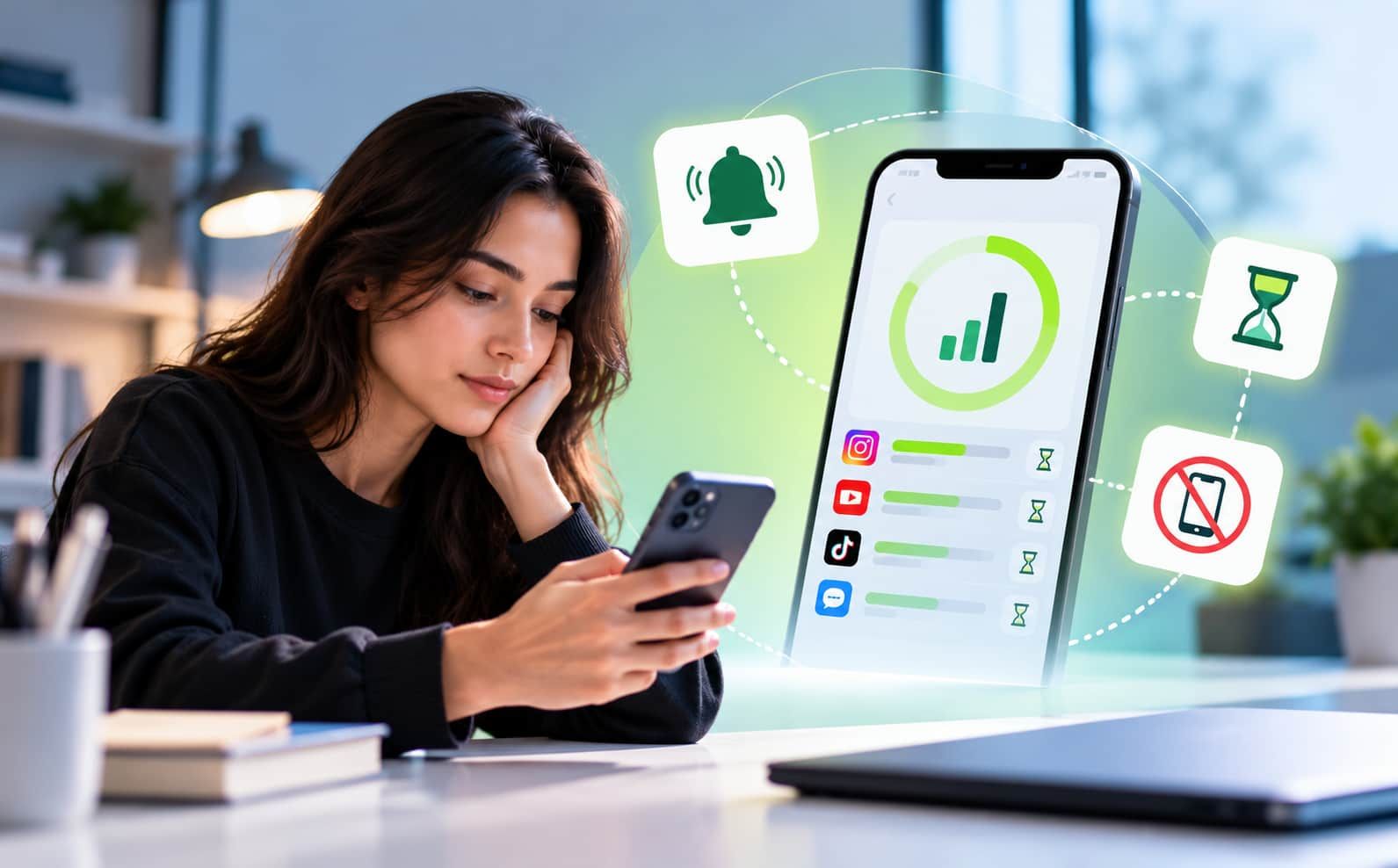
Jolt provides that structure in a practical way. It helps you see your usage clearly, set firm boundaries, and protect your focus hours. Instead of forcing extreme detox, it supports gradual and sustainable improvement.
- Detailed Screen Time Reports – View accurate daily and weekly usage patterns. Awareness builds control.
- App Blocking During Focus Hours – Temporarily block distracting apps while working or studying.
- Custom App Limits – Set smart usage caps on distracting apps to reduce excessive scrolling.
- Focus Session Timer – Train your brain with timed deep-work sessions.
- Progress Tracking Dashboard – Monitor improvements and stay consistent over time.
When systems replace willpower, discipline becomes easier. Small structured changes lead to lasting digital balance.
Conclusion
Excessive phone use is not a personal failure. It is the result of powerful habit loops designed into digital platforms.
To stop using the phone so much, you must:
- Increase awareness.
- Reduce triggers.
- Create physical and digital boundaries.
- Replace automatic scrolling with intentional actions.
- Build structure instead of relying on willpower.
Tools that monitor screen time, block distracting apps, and create focused work sessions make this process easier. Jolt is designed to support this structure by helping you track usage, set limits, and protect your focus hours step by step.
Your attention is valuable. With the right system, you can take it back.
Frequently Asked Questions
-
Why do I keep checking my phone without thinking?
Frequent phone checking becomes an automatic habit. Each notification or scroll gives a small dopamine reward in the brain. Over time, this creates a loop where your hand reaches for the phone without conscious decision.
-
How to stop using the phone so much without deleting all apps?
You do not need to remove every app. Start by setting daily time limits, turning off non-essential notifications, and creating phone-free hours during work or sleep. Structure works better than extreme restriction.
-
Does excessive phone use really affect productivity?
Yes. Research shows that after each interruption, it can take more than 20 minutes to regain full focus. Frequent phone use breaks concentration and reduces deep work quality.
-
Can reducing phone use improve mental health?
Yes. Studies link heavy phone use with higher stress, anxiety, and sleep problems. Reducing screen time often improves mood, sleep quality, and overall mental clarity.
-
How long does it take to break the habit of phone scrolling?
Habit change takes time. Behavioural research suggests that consistent practice over several weeks can weaken automatic habits. Small daily boundaries, repeated regularly, gradually retrain the brain.

 Download Now
 Take charge of your time


 Twinkle