Duration Limit: The Feature That Ends Mindless Scrolling for Good
8-minute read
Overview:
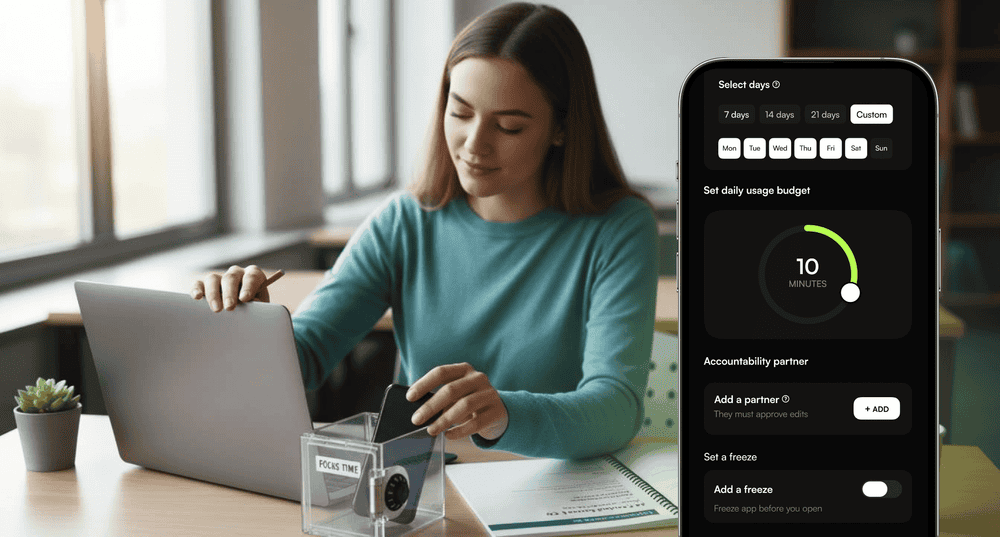
You open an app to check one notification. 40 minutes vanish. Duration Limit fixes exactly this, a real-time daily timer that locks any app once your chosen minutes run out. No guilt, no willpower required. Just a clear, honest cutoff you set once, choose your enforcement difficulty for, and let the app hold you to it, every single day.
Why "Just Checking Quickly" Rarely Stays Quick
Most screen-time slippage isn't a decision; it's the absence of one. You don't choose to scroll for 40 minutes; you simply never chose to stop.
Research on habit and self-regulation backs this up: a large field study found that screen-time tracking alone raises awareness of usage but rarely reduces it, because knowing your numbers isn't the same as having a boundary that intervenes at the right moment screen-time tracking improves digital self-awareness but that it is less likely to lead to a reduction of mobile usage
(Journal of the Association for Consumer Research). That's the gap Duration Limit is built to close, it doesn't just show you the number, it acts on it.
How Duration Limit Works
- Pick an app you want to keep in check.
- Set a daily time limit — anywhere from 15 minutes to 6 hours, or use a quick preset (30 min, 1 hour, 90 min).
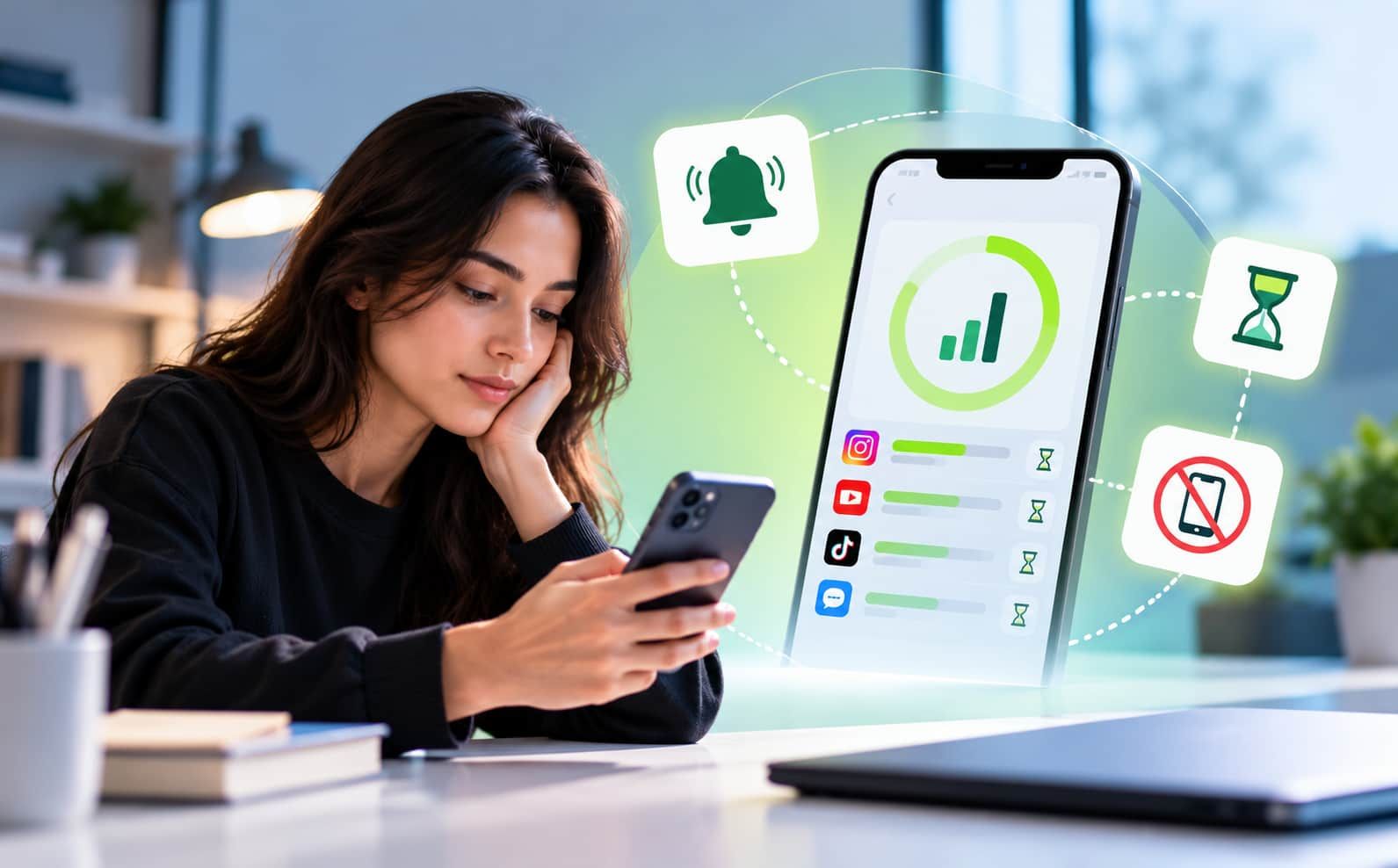
- Track it live — see exactly how many minutes are left before the lock kicks in, so the cutoff never blindsides you.
- Choose your block difficulty — the harder the mode, the more aware you're made each time you try to push past your own limit.
This mirrors what researchers call a "soft commitment device" — a boundary you set for your future self in advance. A study on smartphone limits found that encouragement to adopt application limits significantly reduces smartphone and Facebook use, largely because the limit itself does the enforcing, not your in-the-moment willpower
(ScienceDirect).A broader review of digital wellbeing tools reached a similar conclusion, noting that hard, enforced limits showed moderate to strong evidence for actually reducing problematic phone use, unlike passive tracking-only tools
(JMIR).Why It Works Better Than Willpower Alone
You're not relying on remembering to stop or feeling guilty afterward. The limit is set once, ahead of time, when you're thinking clearly, and it's enforced automatically every single day after that, regardless of how tempting "just five more minutes" feels in the moment.
Conclusion
Duration Limit isn't about restriction for its own sake; it's about closing the gap between intention and action. Set your number once, see your time counting down in real time, and let the lock do what willpower often can't. It's a small, one-time decision that quietly protects hours of your day, every day, without you having to think about it again.
FAQs
What happens once my Duration Limit is reached?
The app locks automatically for the rest of the day. It reopens the next day once your timer resets.
Does Duration Limit count how many times I open an app?
No, it tracks only total active minutes spent inside the app, not the number of times you open it.
Can I change my time limit later?
Yes, you can adjust your daily limit or block difficulty at any time; the new setting takes effect from your next reset.
Ref:

 Download Now
 Take charge of your time