Why Screen Time Apps Are Essential for Managing Digital Habits in 2026
Digital life in 2026 is no longer optional. Screens are part of daily routines, work, study, and communication.
People wake up with their phones and often end their day the same way. While technology has made life easier, it has also created a new problem: uncontrolled screen habits.
This is why a
Screen Time App has become essential. It helps people manage their digital behaviour and build a balanced lifestyle.
The Reality of Digital Habits in 2026
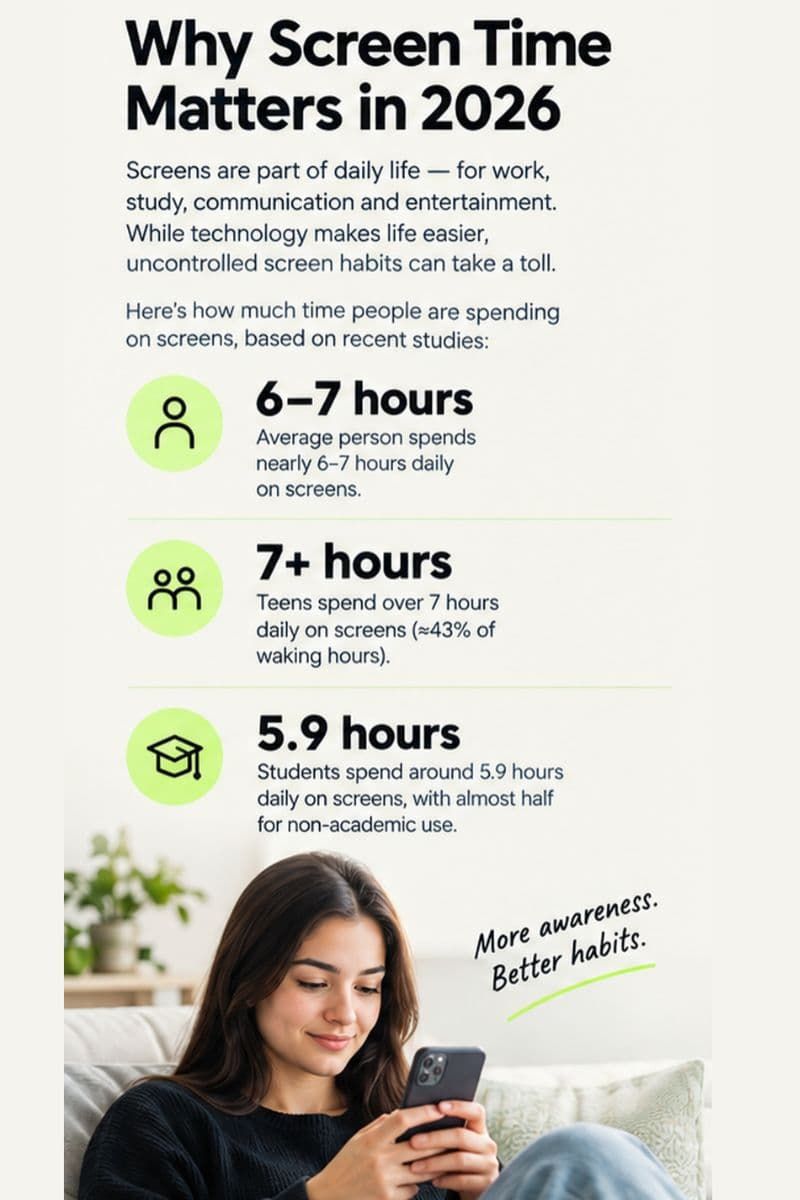
Screen usage has reached a level where it shapes daily life. Studies show that the average person spends nearly
6 to 7 hours daily on screens, which is almost half of waking time.
Another insight shows that many students spend around 5.9 hours daily on screens, with almost half of this time used for non-academic purposes.
This level of exposure is not temporary. It has become a permanent part of modern life.
Why Digital Habits Are Becoming a Serious Problem
Digital habits are not only about time. They affect health, focus, and behaviour.
Research shows that excessive screen time is linked with:
- Poor mental health
- Anxiety and depression
- Sleep disturbances
- Low academic performance
In addition, screen overuse reduces physical activity and increases fatigue.
This shows that digital habits are not harmless. They directly impact quality of life.
The Core Problem: Lack of Control, Not Technology
Technology itself is not the issue. The real problem is uncontrolled usage.
Most people:
- Check phones without purpose
- Spend long hours scrolling
- Struggle to stop even when needed
This behaviour is driven by:
- Habit loops
- Instant rewards
- Continuous notifications
Without a control system, users fall into repetitive digital patterns.
What a Screen Time App Actually Does
A
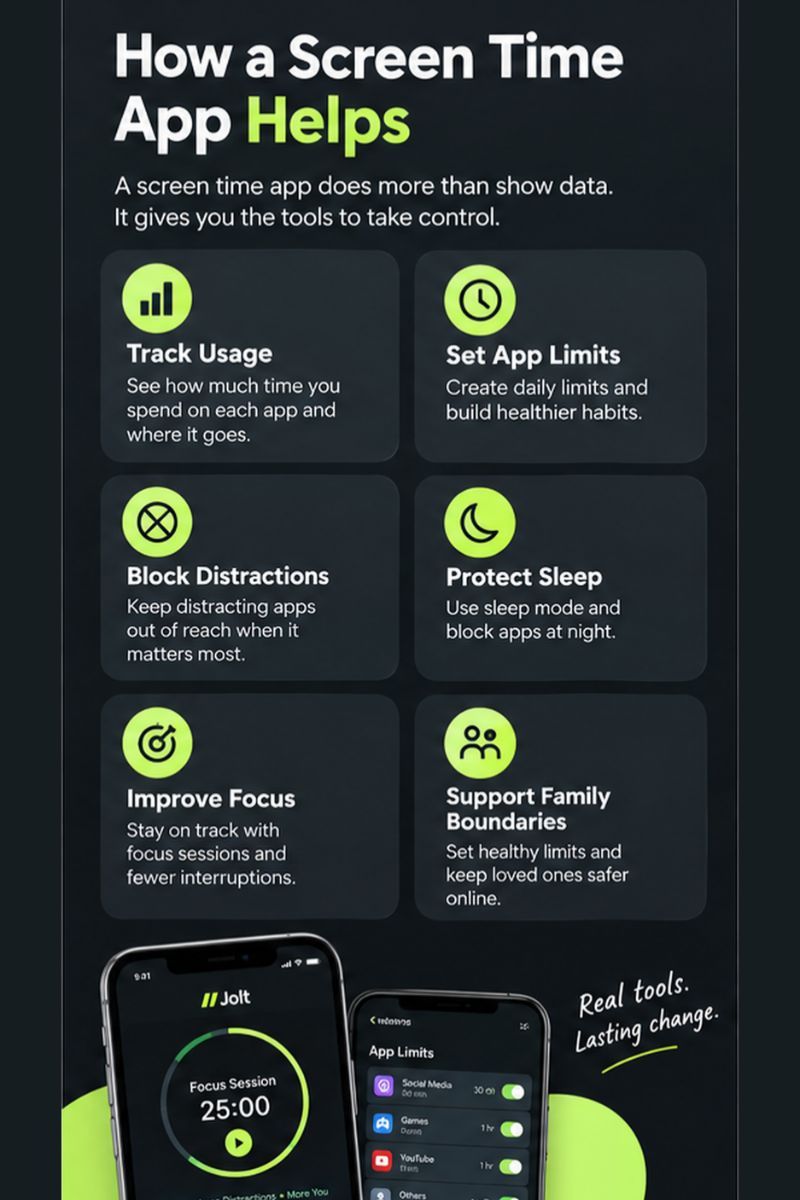
screen time tracker app does more than show usage data. It creates a system that helps users manage their behaviour.
A Screen Time App helps by:
- Tracking how much time is spent on each app
- Blocking distracting apps
- Setting limits and schedules
An app that
limits screen time turns awareness into action. Instead of only knowing the problem, users can control it.
1. Helps Users Understand Their Digital Behaviour
The first step in change is awareness.
A screen time tracker app shows:
- Daily usage
- Most used apps
- Peak usage times
Many users are surprised to see how much time they spend on their phones. This creates a strong realisation.
Studies suggest that
tracking behaviour helps users make better decisions and reduce overuse.
Without tracking, habits remain invisible. With tracking, habits become measurable and manageable.
2. Creates Strong Digital Boundaries
Modern life has no natural limits for screen usage. People can use apps anytime.
An app to control screen time creates boundaries by:
- Blocking apps during work or study
- Setting time limits for social media
- Creating no-phone hours
These boundaries reduce constant access to distractions.
Research shows that
excessive access leads to higher usage and lower productivity. By limiting access, behaviour improves naturally.
3. Reduces Addiction and Compulsive Usage
Digital platforms are designed to be addictive. Features like endless scrolling and notifications keep users engaged.
A screen time tracker app helps reduce this by:
- Limiting usage time
- Blocking addictive apps
- Breaking habit loops
Over time, users feel less dependent on their phones.
4. Improves Focus and Productivity
One of the biggest benefits of a Screen Time App is improved focus.
Constant interruptions reduce productivity. Even a small distraction can break concentration.
An app that limits screen time helps users:
- Focus on one task at a time
- Avoid multitasking
- Complete work faster
5. Supports Better Mental Health
Mental health is closely connected to screen usage.
Excess screen time is linked with:
- Anxiety
- Depression
- Low self-esteem
A screen time parental control app or personal control tool helps reduce these effects by:
- Limiting exposure to harmful content
- Encouraging offline activities
- Creating balanced routines
Balanced screen use leads to better emotional health.
6. Improves Sleep Quality
Late-night screen use is a major issue in 2026.
People often:
- Scroll before sleeping
- Stay awake longer than planned
A Screen Time App can:
- Block apps at night
- Set sleep schedules
- Reduce blue light exposure
Better sleep improves energy, mood, and productivity.
7. Helps Parents Manage Children’s Screen Use
Children are exposed to screens at a very early age.
Data shows that many children start using digital devices before age 8.
A screen time parental control app helps parents:
- Monitor children’s usage
- Block harmful content
- Set daily limits
This ensures healthy digital habits from an early age.
Digital Habit Management Matrix
| Digital Habit | Without Control | With the Screen Time App |
|---|
| Usage Time | High | Controlled |
| Focus | Low | Improved |
| Sleep | Disturbed | Balanced |
| Mental Health | Affected | Stable |
| Productivity | Low | Higher |
This shows how structured control changes behaviour.
Let’s Learn Through a Few Examples
Consider a working professional:
- Uses phone for 6–7 hours daily
- Checks social media frequently
- Feels tired and distracted
After using a Screen Time App:
- Social media is limited to 30 minutes
- Work hours are distraction-free
- Night usage is blocked
Within a few weeks:
- Focus improves
- Stress reduces
- Productivity increases
This change happens because of system-based control.
The Bigger Insight for 2026
Digital habits are no longer a small issue. They affect:
- Health
- Work performance
- Relationships
- Learning
Moderate and controlled screen usage leads to better well-being, while excessive use increases risk factors.
This is why tools are necessary.
A screen time tracker app acts like a control system for modern life.
Conclusion
In 2026, managing screen time is not optional. It is necessary for maintaining balance. Uncontrolled usage leads to distraction, poor health, and reduced productivity.
An
app to control screen time provides a structured solution. It helps users understand their habits, set limits, and build discipline.
Instead of depending only on willpower, people can use systems that support better behaviour. This is where
Jolt helps users take control of their
digital habits and create a more focused and balanced life.
Frequently Asked Questions
1. What is a Screen Time App and how does it work?
A Screen Time App tracks usage, blocks distracting apps, sets limits, and helps users control digital habits through structured time management daily.
2. Why is a screen time tracker app important in 2026?
A screen time tracker app is important because digital usage is increasing, and users need control tools to manage habits, focus, and well-being.
3. Can an app that limits screen time improve productivity?
Yes, an app that limits screen time reduces distractions, improves focus, and helps users complete tasks faster with better efficiency and consistency daily.
4. How does a screen time parental control app help families?
A screen time parental control app helps parents monitor usage, set limits, block harmful content, and guide children towards healthier digital habits safely.
5. Is it safe to use an app to control screen time?
Yes, most apps to control screen time are safe, protect user data, and are designed to support better habits without affecting device performance.

 Download Now
 Take charge of your time



 Twinkle