What Does Emotionally Unavailable Mean? Signs, Root Causes & How to Heal
Being
emotionally unavailable means a person has trouble forming deep emotional bonds or sharing feelings openly in relationships.
It can make closeness feel hard, even when the person still cares about the other person. This is often not about being cold on purpose. It is usually a pattern built from fear, stress, past hurt, or emotional habits.
An emotionally unavailable person may want connection but still pull away when things get too real.
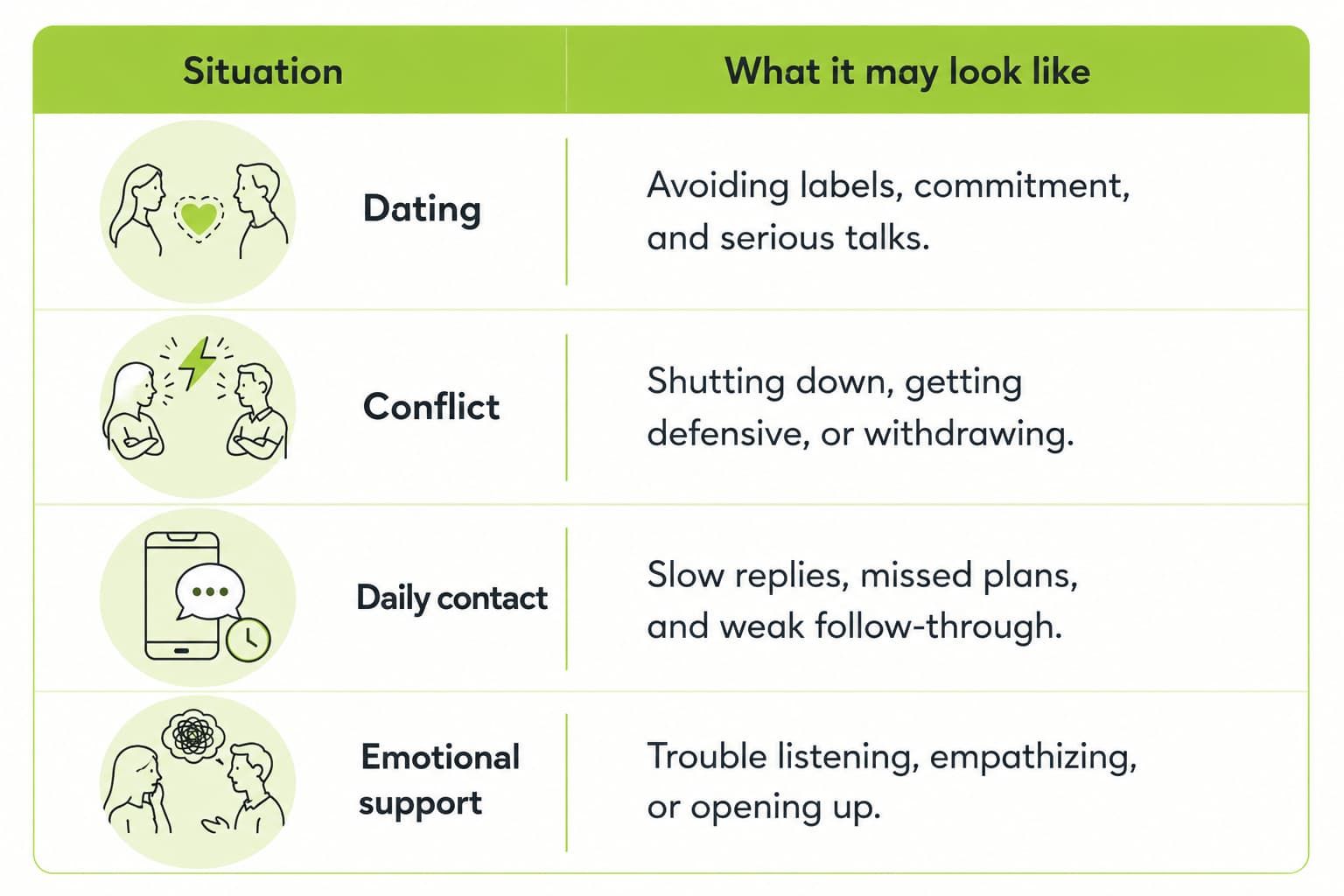
They may avoid serious talks, keep relationships light, or feel uncomfortable with vulnerability.
Common Signs of an Emotionally Unavailable Person
A common sign is that the person avoids deep conversations about feelings, the future, or the relationship itself.
They may also delay replies, cancel plans, or keep the connection on their own terms.
Another sign is emotional distance during conflict, where they shut down, get defensive, or leave the other person feeling ignored.
Here are a few simple signs you may see:
- They do not like commitment or clear labels.
- They keep things shallow and avoid emotional topics.
- They prioritize work, hobbies, or routines over connection.
- They struggle to show empathy or respond to emotional needs.
- They pull away when the relationship gets closer.
A helpful example is this: someone may enjoy dating, texting, and spending time together, but still avoid saying how they feel or where the relationship is going.
That mix can leave the other person confused and emotionally drained.
Why People Become Emotionally Unavailable
There is no single cause of emotional unavailability. A major reason can be early life experiences such as childhood trauma, neglect, or inconsistent emotional support. These experiences can teach a person to protect themselves by staying distant.
Past relationship pain can also play a role. Betrayal, heartbreak, or fear of rejection may make someone avoid closeness because closeness feels risky. Stress, grief, addiction, and mental health conditions can also reduce emotional capacity and make a person withdraw more often.
Some people also learn emotional distance from family or culture. If they grew up around people who never talked about feelings, they may copy that style without realizing it. In some cases, they may rely more on logic than emotions, which can make them seem closed off.
How Emotional Unavailability Affects Love and Trust
Emotional unavailability can create a painful cycle. One person keeps trying to connect while the other keeps pulling away, and that gap can lead to frustration, loneliness, and mistrust. Over time, the relationship may feel unstable or one-sided.
Healthline says emotionally unavailable people can make relationships feel hard because emotional bonds are difficult to sustain. Therapist.com notes that emotional unavailability can affect romantic, parent-child, and other close relationships, and it may lead to deeper problems like poor communication and weaker trust.
A study cited by
therapist.com also notes that emotional unavailability shows up in a meaningful share of adult relationships, with about 25% to 30% of adults reporting it in significant relationships.
How Jolt App Helps You Break the Cycle
Jolt App can help when emotional distance starts affecting your attention, mood, and daily routine. It is built to reduce distraction, improve focus, and create healthier phone habits, which can support a calmer and more present mindset.
1. Build Better Focus with Fewer Distractions
Jolt helps people stay focused by
blocking distracting apps and limiting mindless phone use. When your mind is less scattered, it becomes easier to think clearly and stay more present in your relationships.
2. Create Healthy Screen Boundaries
Too much screen time can make people feel detached from real conversations and real feelings. Jolt supports healthier boundaries by letting users set app limits, focus sessions, and screen rules that reduce overuse.
3. Support Calmer Daily Routines
Emotional healing often starts with small daily habits. Jolt’s
sleep mode,
scheduled blocks, and routine-based tools can help users create a more balanced day with less phone pressure and more space to reflect.
4. Reduce Emotional Numbness from Constant Scrolling
Constant scrolling can make people feel overloaded, tired, and mentally checked out. By reducing that overload, Jolt helps users spend less time reacting to endless content and more time being aware of how they actually feel.
5. Make Space for Real Connection
When people are less distracted by their phones, they are more available for honest conversations. Jolt can support this by helping users put the phone down during meals, conversations, work, or personal time.
6. Encourage Better Self-Awareness
Jolt can help users notice their habits more clearly. Once a person sees how often they reach for their phone, they may also become more aware of when they avoid feelings, silence, or deeper connection.
7. Turn Small Wins into Long-Term Change
Healing emotional patterns takes time, and small wins matter. Even simple changes like fewer random checks, fewer late-night scrolls, and more focused time can build a stronger daily rhythm over time.
Jolt does not replace emotional healing, but it can support a healthier mental space by reducing distraction, improving focus, and helping people create better habits that make real connection easier.
How to Heal from Emotional Unavailability
Healing starts with honesty and self-awareness. If you notice these patterns in yourself, try to name what you feel and what you avoid. Writing in a journal, talking to a trusted friend, or noticing when you pull back can help you understand your pattern better.
Small steps matter more than big promises. You can practice sharing one real feeling, one small worry, or one honest thought at a time. If the root issue is trauma,
anxiety and depression, or long-term fear of closeness, therapy can help a lot. Healthline and therapist.com both note that professional support can be useful when the pattern is persistent or painful.
If you are dealing with someone who is emotionally unavailable, keep your boundaries clear. You can be kind without chasing, forcing, or trying to fix them. A healthier connection needs effort from both people, not just one.
For readers who use Jolt, this is also a good reminder that emotional patterns often improve when the mind is less overloaded and more present. Building calmer routines, better focus, and healthier daily habits can make space for more honest connection, both with yourself and with others.
Sources
- Emotionally unavailable: Meaning, signs, and how to heal - Therapist.com
- What Does It Mean to Be Emotionally Unavailable: Understanding the Signs and Impact on Relationships - Alix Needham
- What It Really Means to Be Emotionally Unavailable - Healthline
Frequently Asked Questions
- Can an emotionally unavailable person change?
Yes, with self-awareness, honest effort, and sometimes therapy, an emotionally unavailable person can learn healthier emotional habits over time.
- Is being emotionally unavailable always permanent?
No, emotional unavailability is not always permanent. Many people improve when they face root causes and practice open communication regularly.
- Does screen time affect emotional connection?
Yes, too much screen time can reduce presence, attention, and real conversation, which may make emotional connection feel weaker over time.
- Can better phone habits improve relationships?
Yes, healthier phone habits can create more focus, better listening, and more space for real connection in daily life.
- Is emotional unavailability a sign of trauma?
Yes, it can be linked to trauma, past hurt, or fear of closeness, though not every emotionally unavailable person has trauma.

 Download Now
 Take charge of your time