How does Excessive Screen Time Impact Student Academic Performance
Too much screen time is no longer just a “bad habit.” It has become one of the hidden reasons many students struggle with focus, homework, and grades making the role of a screen time control app more important than ever. Research shows that long hours on phones, social media, and streaming are clearly linked with lower academic performance, weaker learning habits, and increased academic stress.
When screens replace deep study, proper sleep, and real breaks, even bright students can see their performance decline over time. This is where a well-designed
screen time control app can quietly make a difference helping students set limits, reduce distractions, and build healthier study routines without feeling overwhelmed.
Studies Linking Screen Time and Learning Outcomes
Many studies now connect screen time and academic performance in a very direct way. In several school-based studies, students who spent more than about
2–3 hours a day on recreational screen time tended to have lower grades and test scores than those with limited use.
One analysis reported that heavy screen users were more likely to score below average in reading and math compared with students who kept their non-study screen use low.
Screen time also changes how students learn. A 2025 review of research by
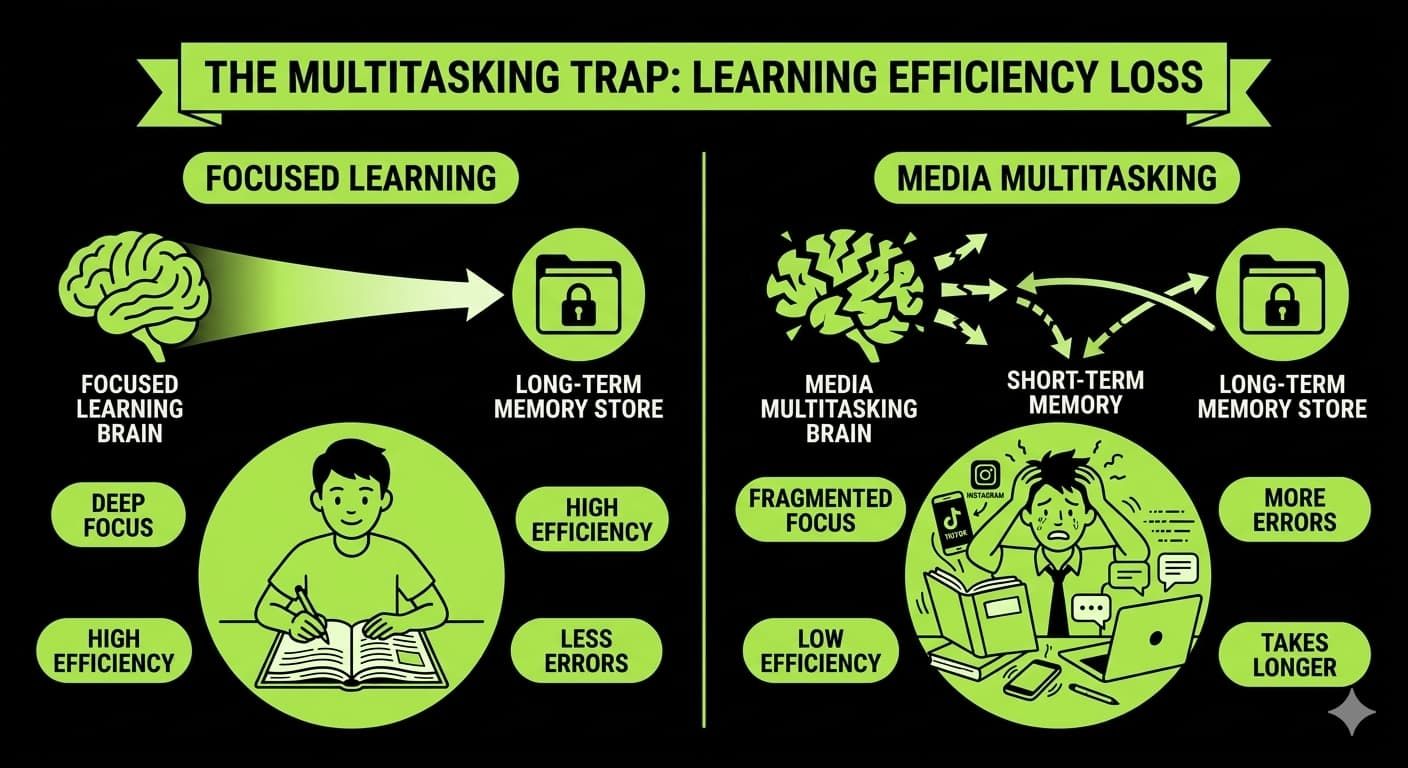
Research Gate found that high screen use is linked with weaker attention, more media multitasking, and poorer learning efficiency.
This means students spend more time with books and notes but remember less, because their brains are constantly switching between study tasks and screens.
- According to NIH, students who used screens for more than 3 hours a day for entertainment had significantly lower exam scores than those under 2 hours.
- A recent review by Science Direct found that increased total screen time was associated with reduced academic achievement and more learning difficulties, especially when the time was not related to school work.
Effects on Homework and Assignments
Excessive screen time does not only affect big exams. It quietly disrupts daily homework and assignments.
When students keep their phones next to them, they may check notifications, scroll social media, or watch “short breaks” that turn into long gaps.
This stops deep focus and leads to more errors and slower work.
Common effects on homework and daily study:
- Homework takes much longer than it should because students multitask between apps, chats, and videos.
- Students skim rather than read deeply, so they miss important details and struggle with problem-solving questions later.
- Frequent switching between tasks makes it harder to move information into long-term memory, which weakens revision and exam prep.
Screen time late at night causes another big problem: poor sleep. Studies show that screen use close to bedtime is linked to shorter sleep and lower-quality rest, which directly affects next-day attention, memory, and classroom performance.
Tired students find it harder to complete assignments on time and may lose marks for careless mistakes.
How Screens Change Learning Habits
Over time, constant phone use can reshape learning habits:
- Students start to rely on quick answers and shortcuts instead of practicing hard questions.
- They avoid long, deep study sessions and instead study in short bursts while still being “online.”
- They feel restless without a screen, which makes quiet reading or planning feel boring and difficult.
How to Balance Study and Phone Use
The aim is not to remove screens completely. Phones and laptops are also powerful study tools.
The goal is to build clear rules so that screens support learning instead of blocking it.
A simple plan that mixes study, short breaks, and limited entertainment can protect both grades and mental health.
Practical steps to balance screen time and academic performance:
- Set a daily limit for non-study screen time, such as 1–2 hours for social media, gaming, and streaming.
- Use “focus blocks” for homework and revision, for example 30–50 minutes of full focus followed by a 5–10 minute break.
- Keep the phone out of reach during focus blocks, or use app-blocking tools so only study apps stay active.
- Turn off non-essential notifications during school hours and evening study time.
- Stop using screens at least one hour before bed to improve sleep, which boosts focus and memory the next day.
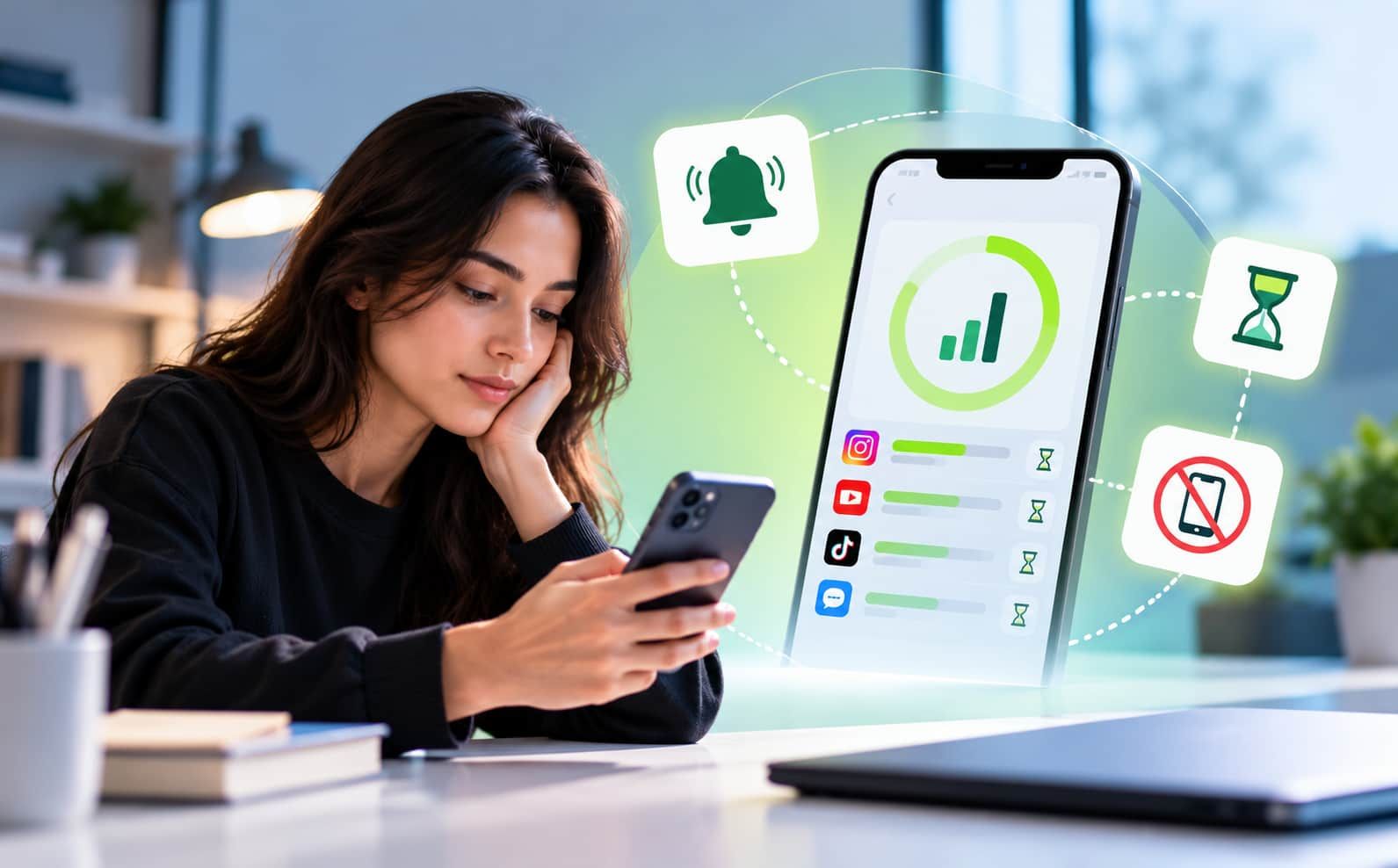
Digital wellbeing tools can make this balance easier. Students can schedule focus sessions for homework time, automatically block social media during those sessions, and set daily app limits so they do not cross their entertainment screen quota.
Progress tracking and small challenges can also motivate them to stay consistent with their new learning habits.
Conclusion
Excessive screen time does not ruin grades in a single day, but it slowly chips away at focus, homework quality, sleep, and confidence in learning. Studies show a clear pattern: when non-study screen time goes up, academic performance and achievement often go down, especially if students are multitasking while they learn.
By setting simple limits, protecting homework time, and using digital tools that block distractions and support focus, students can enjoy their phones without sacrificing their results.
Jolt is best screen time app for iOS which offers focus sessions, app limits, and habit-building features that help students turn these ideas into daily routines, so screens work for their learning instead of against it.
Frequently Asked Questions
1. How many hours of screen time is okay for students each day?
For most students, keeping non-study screen time around 1–2 hours a day is a practical and healthy target. This leaves enough time for homework, sleep, exercise, and offline activities that support better grades and focus.
2. Can screen time ever help academic performance?
Yes, screen time can support learning when it is used for school work, online classes, research, and educational apps. The main problem comes from long hours of entertainment use, like endless social media, gaming, or streaming, especially when it replaces study and sleep.
3. How does excessive screen time affect grades?
Too much screen time can:
- Reduce the time students spend on homework and revision.
- Break focus during study through constant notifications and multitasking.
- Harm sleep quality, leading to poorer attention and memory in class.
Over time, these factors can lower test scores, assignment quality, and overall academic achievement.
4. What are warning signs that a student’s screen time is hurting their learning?
Warning signs include:
- Falling or unstable grades and incomplete homework.
- Needing the phone nearby at all times, even during study.
- Difficulty reading or revising for more than 15–20 minutes without checking the screen.
- Tiredness in the morning from late-night scrolling and irritability when asked to put the phone away.
5. How can students balance phone use and study time in a simple way?
Students can start with a few clear rules:
- Fix a daily limit for entertainment screen time (for example, 1–2 hours).
- Use focused study blocks (30–50 minutes) with the phone on silent or blocked.
- Turn off non-essential notifications during homework time.
- Keep screens away at least one hour before bed.
Tools like scheduled focus sessions, app blocking, and screen time tracking (such as the features offered by Jolt) can make it easier to follow these rules every day.

 Download Now
 Take charge of your time