How does Screen Time Affect Brain Function and Memory in Students
Screen time affects brain function and memory in students by shaping attention span, information processing, learning ability, and long-term brain development. Excessive, unstructured screen use weakens focus and memory formation, while controlled and purposeful screen use can support learning and cognitive growth.
Understanding Screen Time and Cognitive Function
Screen time refers to time spent on phones, tablets, laptops, and computers. For students, screens are essential for classes, assignments, and research. However, the human brain is not designed for constant digital stimulation.
Studies published in
NIH show that excessive digital exposure overloads the brain with fast-changing information. This overload directly impacts screen time and cognitive function, especially in students whose brains are still developing. The brain learns best when it can focus deeply without frequent interruptions.
When screens are used without limits, the brain shifts from deep thinking to surface-level processing. This reduces learning quality.
The Impact of Screen Time on Attention
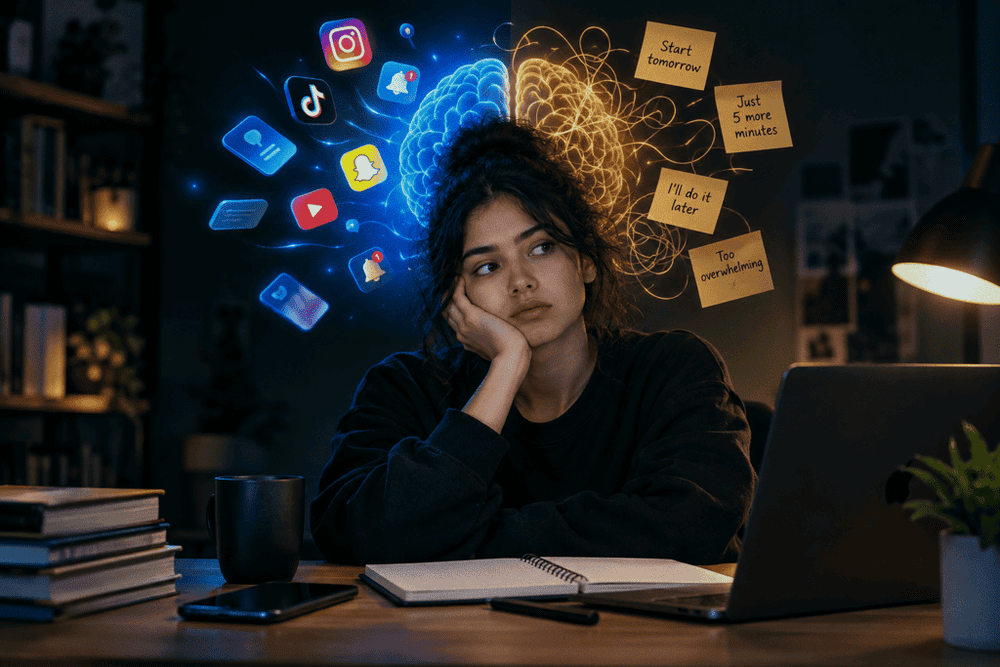
Attention is the ability to focus on one task without distraction. Screens challenge this ability because they encourage multitasking.
When attention is constantly broken, students struggle to stay engaged during study sessions. Over time, the brain becomes trained to expect distraction, making sustained focus difficult.
Memory is essential for learning. Information must move from short-term memory to long-term memory for real understanding.
- Deep focus strengthens neural connections.
- Repeated distractions interrupt memory consolidation.
- Passive screen use weakens recall ability.
A study published in the
NIH explains that memory formation requires uninterrupted time. When students study while switching apps or checking notifications, the brain does not store information effectively.
Common memory issues linked to excessive screen use include:
- Forgetting recently studied topics
- Difficulty recalling information during exams
- Slower understanding of complex subjects
Screen Time and Learning Efficiency
Learning is an active brain process. Reading deeply, solving problems, and writing notes activate multiple brain areas. In contrast, scrolling and watching short videos require less cognitive effort.
- Students who spend more than 4 hours per day on non-academic screen activities score lower in reading, mathematics, and science.
- Students with structured digital study habits perform better academically.
Screens support learning only when they are used with purpose. Without structure, screen use reduces learning efficiency.
Effects on Brain Development in Students
Brain development continues into the mid-20s. During this period, habits strongly shape how the brain functions.
- The Stanford Lifestyle Medicine reports that excessive screen exposure affects the prefrontal cortex, which controls focus, decision-making, and self-control.
- High screen use is linked to reduced emotional regulation and impulse control.
This does not mean screens are harmful by nature. The problem lies in overuse without boundaries, breaks, or intention.
Key Scientific Statistics and Facts
The following data highlights why screen management is critical for students:
- Students spend an average of 7–9 hours daily on screens (BBC).
- Heavy screen users show reduced grey matter density in brain areas related to attention (Cambridge University Press and Assessment).
- Limiting digital distractions improves task performance by up to 40% (US Department of Education).
- Focused study sessions improve memory retention by 20–30% compared to distracted study (NIH).
These facts clearly show the connection between screen habits and brain health.
Controlled vs Excessive Screen Time: Cognitive Impact
| Screen Use Pattern | Effect on Attention | Effect on Memory | Impact on Learning |
|---|
| Excessive, unplanned screen use | Frequent attention breaks | Weak memory retention | Lower academic performance |
| Multitasking during study | Reduced focus control | Poor recall | Slower understanding |
| Structured and timed screen use | Improved concentration | Stronger memory links | Better learning outcomes |
This comparison shows that structure, not avoidance, is the key to healthy screen use.
When Screen Time Supports Cognitive Growth
Not all screen time harms the brain. Educational platforms, digital textbooks, and interactive tools can enhance learning when used correctly.
Positive screen use includes:
- Timed focus sessions
- Clear study goals
- Limited notifications
- Regular offline breaks
Products designed for focus and productivity help students shift from passive consumption to active learning.
Why Screen Time Management Matters for Students
Managing screen time protects:
- Attention span
- Memory strength
- Learning speed
- Emotional balance
Journal of Medical Internet Research studies show that habit-based screen management systems improve consistency by up to 60% compared to self-control alone. This is why supportive digital tools are more effective than strict rules.
Signs That Screen Time Is Affecting Brain Function
Students should watch for these warning signs:
- Constant distraction during study
- Forgetting learned material
- Mental fatigue
- Difficulty sleeping
These symptoms often improve when screen use becomes structured and intentional.
How Jolt Supports Healthy Brain Function and Memory in Students
Scientific research shows that structured screen use improves cognitive outcomes.
A study from the
Oxford Academics found that reducing digital interruptions can improve sustained attention by up to 30%, while focus-based study routines improve memory recall over time.
Jolt is built around these research-backed principles. Its products help students
manage screen time through guided focus sessions, distraction control, and usage insights that encourage intentional learning.
Data from the
Canadian Paediatric Society studies show that students who actively track and limit distractions reduce unnecessary screen exposure by 35–45% and show better consistency in study habits.
| Jolt Feature | Cognitive Benefit |
|---|
| Student Focus sessions | Stronger attention control |
| App restriction | Fewer memory-breaking interruptions |
| Usage insights | Improved learning awareness |
Conclusion
Screen time has a powerful influence on attention, memory, learning, and long-term brain development in students. Scientific evidence clearly shows that excessive and unplanned screen use weakens cognitive performance, while structured and mindful use supports healthy brain function.
By using productivity-focused digital tools, students can build stronger focus, protect memory, and learn more effectively.
Jolt - Screen Time App helps students turn screens into tools for learning rather than sources of distraction, supporting better cognitive health and academic success.
Frequently Asked Questions
- How does screen time affect cognitive function in students?
Screen time affects cognitive function by influencing how the brain processes information. Excessive and unstructured screen use reduces attention span, slows thinking, and weakens memory formation. Controlled and purposeful screen use supports better learning and mental clarity.
- Can too much screen time impact memory in students?
Yes. Studies show that frequent digital distractions interrupt memory consolidation. When students switch between apps or receive constant notifications, the brain struggles to store information properly, leading to weaker recall and poor exam performance.
- Does screen time affect attention and focus during learning?
Screen time strongly affects attention. Multitasking on digital devices trains the brain to expect constant stimulation, which reduces the ability to focus on one task. Limiting distractions improves sustained attention and study efficiency.
- Is all screen time harmful for brain development?
No. Screen time used for structured learning, research, and skill-building can support brain development. The problem arises when screen use is excessive, passive, or unplanned, especially without breaks or limits.
- How can students protect brain function while using digital devices?
Students can protect brain function by setting screen time limits, using focus-based study sessions, avoiding multitasking, taking offline breaks, and using productivity tools that encourage intentional and mindful screen use.

 Download Now
 Take charge of your time