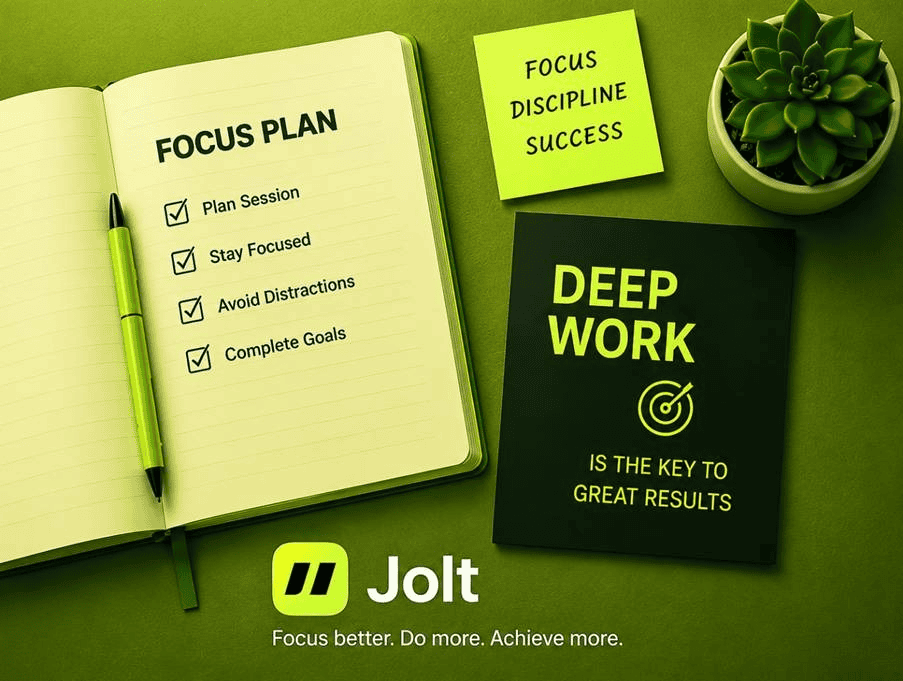
What Is a Focus Score? Breaking Down How Your Daily Focus Is Actually Measured
7-minute read
Overview: In a world full of distractions, Focus Score is a simple yet powerful way to understand how well you truly focus each day. It measures not just time spent working, but how committed you are during intentional focus sessions. By tracking habits like session completion, distractions, and screen use, it reveals your real productivity patterns. Instead of guessing, you get clarity on your focus behavior and can improve consistency, discipline, and deep work over time for better daily performance overall.
What Is a Focus Score and Why Focus Score Matters?
In a world full of distractions, measuring productivity is more critical than ever. While most apps track general screen time or enforce usage limits, Focus Score takes a more targeted approach. It evaluates one specific behavior: when you intentionally start a focus session, do you actually follow through? By ignoring the rest of your day, it isolates and measures your true commitment to your goals.
What Does Jolt’s Focus Score Actually Measure?
Jolt’s Focus Score shows how often you take part in structured focus sessions. It only considers sessions you actively start and does not include passive tracking, app limits, or activity outside those sessions. If you don’t start a session, no score will appear.
Your Focus Score is built from key session behaviors: Session Completion Rate (finishing what you start), Focus Session Duration (time engaged), Pickup Quality (returning to focus), Screen Time (distractions), Break Time (recovery balance), Session Check-Ins (awareness), and GPS/Context Stability (consistent environment). Together, these reflect how deliberately and consistently you focus; stronger, more intentional sessions lead to a higher score over time.
How Jolt’s Focus Score Metrics Work Together to Measure True Productivity
Focus Score is built from multiple components that together give a complete picture of how effectively you use your focus sessions.
- Focus Duration: Focus Duration measures how much of your planned session time is spent in uninterrupted focus, reflecting both effort and consistency. Accounting for 25% of your total score, it evaluates how closely you stick to your intended focus period. Time lost to snoozing or leaving early reduces this metric, making consistency just as important as effort. This is deeply grounded in attention science; pioneering research on the cost of interrupted work at UC Irvine shows that recovering from a single distraction requires a significant cognitive toll and introduces friction that breaks mental momentum.
- Completion Rate: Completion Rate measures how consistently you follow through on the focus sessions you begin, reflecting your ability to finish what you start. Contributing 25% toward your overall metric, it tracks whether your sessions are completed as planned. Abandoning or deleting sessions counts as incomplete, reducing your score and highlighting gaps in follow-through and commitment.
- Pickup Quality: Pickup Quality measures how often you pick up your phone and the nature of what you engage with, reflecting how fragmented or intentional your attention is. Making up 15% of your final evaluation, frequent pickups or opening distracting apps lower your score. This metric emphasizes not just usage, but the quality of interactions, highlighting how small, repeated interruptions can impact overall focus.
- Block Adherence: Block Adherence measures how well you stick to your scheduled blocks without bypassing or weakening them, reflecting your ability to respect your own boundaries. Factoring 15% into your score, it penalizes excessive snoozing, reinforcing the importance of staying committed to your planned schedule and maintaining consistent discipline.
- Screen Time During Sessions: Screen Time During Sessions measures how much you actively use your device while a focus session is still running, revealing hidden distractions within supposed focus time. Accounting for the remaining 10% of your score, it captures usage that occurs despite an active session. Higher interaction during sessions lowers your score, emphasizing the importance of truly disengaging to maintain uninterrupted focus. According to the landmark UT Austin "Brain Drain" study, even when you don't actively look at your phone, its mere presence nearby consumes limited-capacity cognitive resources, draining your baseline focus.
- Consistency: Consistency measures how reliably you maintain strong focus habits over time, reflecting sustained performance. Rounding out your evaluation at 10%, it rewards users who achieve strong Focus Scores across days. Behavioral psychology shows productivity depends on building habits over time, not just one perfect session. As demonstrated by repetition shifts tasks from high-effort conscious planning to automated behavioral routines.
FAQs
How to Build Better Focus Habits?
Maintain a timetable & start small with specific, attainable concentration sessions. Limit phone use & establish a discrete workspace to reduce distractions. Keep track of your progress, refrain from dozing off, and strive to finish what you begin. To increase attention, discipline, and long-term production, consistency is essential. Develop regular habits.
Struggling to Focus? Try These Simple Fixes That Work
Avoid distractions such as phone notifications and begin with brief, timed sessions. Establish a tidy, devoted workspace and stick to a straightforward schedule. Refrain from multitasking and make a commitment to complete things. Perfection is not as important as consistency; little daily gains will help you become more focused and develop long-lasting focus habits.
Why Is My Focus Score Low and How Can I Fix It?
Incomplete sessions, frequent sleeping, and persistent phone interruptions are common causes of a poor Focus Score. Enhance it by scheduling reasonable meetings, avoiding disruptions, and completing the tasks you begin. Set your phone aside and maintain consistency. Tools like the Jolt screen time app can help you reduce distractions and focus more successfully.
How to Track Your Daily Focus and Stay Productive?
Track daily focus by setting clear priorities each morning and using a timer for work sessions. Record tasks completed, distractions, and energy levels. Review progress at day’s end to spot patterns. Use simple tools like notes or apps like Jolt, limit notifications, take breaks, and adjust routines to improve consistency and productivity.
Conclusion:
Focus Score isn’t just about time; it’s about intent and discipline. Focusing only on structured sessions, it gives a clear picture of how well you commit to deep work. In the end, it’s not about being busy, it’s about being consistent and intentional.
Ref:

 Download Now
 Take charge of your time