What Is Core Sleep, and How Core Sleep Powers Your Body and Mind
8-minute read
Overview: Feeling tired, unfocused, or unrested despite getting enough sleep? This guide reveals how core sleep drives true recovery. Understand sleep cycles, the impact of missing deep and REM sleep, and how to protect your most restorative hours. With simple, science-backed strategies, you’ll build better habits, boost energy, improve focus, and wake up refreshed every day.
Understanding the Core Sleep Stages
Ever wonder what happens while you sleep? Each night, your body passes through a few simple stages: light sleep, deep sleep, and REM. Light sleep comes first, and it's easy to wake up from at this point. Deep sleep comes next, when your body rests fully and repairs itself, building back the energy you'll need. Then comes REM, when most dreaming happens, and your brain stays active even though your body stays still. Together, these stages make up one full sleep cycle, lasting about 90 minutes. Most people go through four to six cycles each night, which is why good sleep leaves you feeling truly rested.
Sleep Stages Table
| Stage | Type | Duration (early night) | What happens |
| Stage 1 | NREM (light sleep) | 1–5 minutes | Transition from wakefulness to sleep; heartbeat/breathing slow, muscles relax, brain remains active. |
| Stage 2 | NREM (light sleep) | Up to 30 minutes | Brain activity slows, body temperature drops, heart rate slows; you spend 45–55% of total sleep here. |
| Stage 3 | NREM (deep sleep) | 40 - 110 minutes | Deepest, most restorative sleep; heartbeat/breathing at lowest levels, tissues grow/repair, energy restored |
| REM | REM sleep | 10 minutes (lengthens later) | Brain most active, vivid dreams occur, eyes move rapidly, body is paralyzed to prevent acting out dreams. |
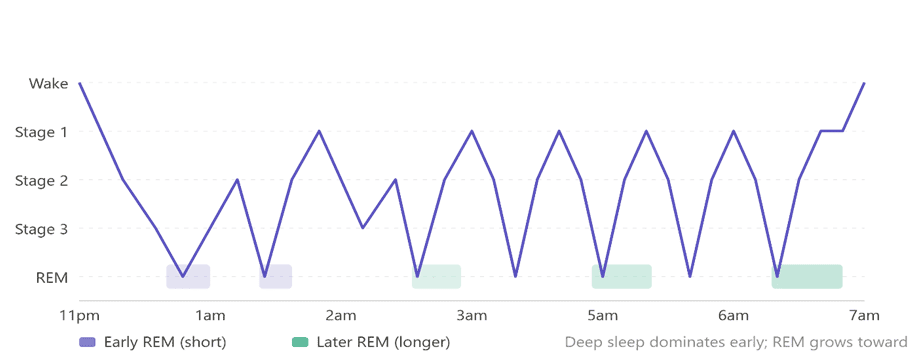
The hypnogram above shows the typical pattern across a night: you cycle through the stages roughly every 90 minutes, but the mix shifts as the night progresses. Early cycles are weighted toward Stage 3 deep sleep; later cycles trade that depth for progressively longer REM periods. This is why cutting sleep short by even an hour or two disproportionately cuts into REM, and why both depth and duration matter for feeling truly rested.
What Is Core Sleep and Why Does It Matter?
Core sleep is the basic amount of sleep your body needs to feel and function well, mainly made up of deep sleep and REM sleep. It matters because this is when your body and mind do their most important work. Deep sleep helps your body rest, recover, and stay strong, while REM sleep helps your brain process thoughts, memories, and emotions.
If you don’t get enough of this core sleep, you may feel tired, unfocused, and moody the next day. In short, core sleep is what keeps you feeling fresh, clear-headed, and ready to handle your daily life with better energy and mood.
Bridging the Gap: How Jolt Helps You Build a Smarter Sleep Routine
Understanding core sleep is only half the battle; protecting it from modern distractions is where your actual productivity is won or lost. This is exactly where the
Jolt app steps in. By leveraging behavioral science, Jolt acts as a digital shield for your sleep cycles, ensuring you actually get the quality rest required for high-level output.
Jolt enhances your daily productivity by cutting out one of the biggest sources of fatigue, late-night scrolling. With its Sleep Mode, it
blocks distracting apps during your bedtime routine, helping your mind ease naturally into sleep without the disruption of blue light or constant stimulation. By monitoring nighttime phone use and providing a daily Sleep Score, Jolt encourages better habits and helps you spend more time in deep and REM sleep, where real recovery happens.
Here’s What Happens When You Skip Your Core Sleep
When you skip your core sleep, you run your body on empty (Or Skipping core sleep is like forcing your brain to run on a dying battery). Missing N3 Deep Sleep halts physical repair and prevents your brain from flushing out toxic cellular waste, leaving you physically exhausted and prone to illness. Skipping REM sleep starves your mind of emotional processing and memory consolidation, causing intense brain fog, irritability, and fractured focus the next day.
This fatigue weakens your willpower, making late-night scrolling and morning distractions incredibly hard to resist. The Jolt app breaks this cycle by acting as a digital shield. Its
Sleep Mode blocks distracting apps at bedtime, ensuring your brain naturally transitions into deep recovery rather than chasing dopamine. By protecting your vital sleep stages, Jolt directly rescues your energy, clarity, and daily productivity.
What Is Core Sleep vs Deep Sleep
Core sleep is the total essential sleep your body needs to function well, including both deep sleep and REM sleep, while deep sleep is just one stage focused on physical recovery. The key difference is that core sleep covers overall rest for body and mind, whereas deep sleep specifically helps your body repair and recharge. In short, deep sleep is a part of core sleep, not the whole thing.
5 Ways to Improve Your Core Sleep (Slow-Wave Sleep (SWS))
The quality of your core sleep isn’t simply a matter of how long you stay in bed; it’s really about whether your body successfully enters the critical stages needed for recovery. If you’re wondering what is core sleep, it refers to the essential portion of your sleep cycle that your body prioritizes to restore energy and maintain proper functioning. When comparing core vs deep sleep, core sleep represents the whole package and is the main focus that helps you truly relax and recharge.
- Stick to a Consistent Sleep Schedule: Go to bed and wake up at the same time every day, even on weekends. Consistency helps regulate your body's sleep-wake cycle, making it easier to fall into deep and REM sleep naturally.
- Create a Sleep-Friendly Environment: Keep your bedroom cool, dark, and quiet. Use blackout curtains or dark coloured curtains, a comfortable mattress, and avoid noise. Make sure you sleep in a peaceful environment; a peaceful environment reduces disturbances that can interrupt your sleep cycles.
- Use the Jolt App to Block Nighttime Distractions: Jolt can help improve your core sleep by blocking distracting apps at bedtime, so you are less likely to stay awake scrolling through your phone. Its Sleep Mode can automatically block selected apps during your wind-down and sleep hours, which supports a calmer routine and more peaceful sleep at night.
- Avoid Heavy Meals, Caffeine, and Alcohol Late in the Day: Caffeine and alcohol disrupt sleep quality and can prevent you from reaching deep sleep. Eat lighter meals in the evening and avoid stimulants at least 6 hours before bedtime.
- Practice Relaxation Techniques: Meditation, deep breathing, or gentle yoga before bed can calm your mind and body. These practices reduce stress and help you transition more smoothly into deep sleep.
CORE SLEEP FAQS: COMMON QUESTIONS ANSWERED
Core vs deep sleep: What Gen Z prefers
It is known that Gen Z pays close attention to their mental and emotional health, hence being attracted to core sleep, which includes both deep and REM sleep. Deep sleep supports bodily restoration, whereas REM sleep regulates mood and helps cope with stress. Growing up in a period of heightened stress and being surrounded by technology, Gen Z finds REM-packed core sleep useful for combating exhaustion and anxiety. They look to apps like Jolt to block late-night doom-scrolling, ensuring they protect these vital emotional-reset cycles.
What food helps core sleep in people above 50
For adults over 50, deep sleep naturally declines, making specific nutrients vital for maintaining high-quality rest. Fatty fish like salmon, rich in vitamin D and omega-3 fatty acids, help regulate serotonin levels to support steady sleep cycles. Tart cherry juice is another excellent addition, as it contains natural melatonin that helps older adults fall asleep faster and stay in N3 deep sleep longer. Additionally, snacking on a handful of walnuts or almonds provides magnesium, which relaxes aging muscles and calms the nervous system
Dietary habits for core sleep
To optimize your sleep quality, your eating schedule matters just as much as what is on your plate. Finishing your last large meal three hours before bedtime prevents active digestion from raising your heart rate, allowing you to transition smoothly into restorative deep sleep. Avoiding heavy, sugary foods late at night prevents blood sugar spikes that disrupt your dreams, while capping afternoon caffeine ensures your brain can naturally slow down for uninterrupted rest.
What is core sleep in Apple Sleep tracking?
Core sleep in Apple Sleep tracking is Apple Watch’s term for light sleep, combining the clinical N1 and N2 non-REM stages. It’s your default sleep state where you spend most of the night (about 45–55%). During core sleep, your heart rate slows, and body temperature drops, helping with memory consolidation and cognitive function.
What is the potential time of core sleep?
The term "core sleep" is used to describe the initial 4 to 5 hours of sleep per night, and this describes the basic amount of sleep necessary to restore both the body and brain. Core sleep usually takes place during your first 3 or 4 sleep cycles.
What are the signs of poor core sleep?
Poor core sleep leaves you feeling wrecked: chronic fatigue, brain fog, and mood swings that make even small tasks feel impossible. You’ll crave junk food, struggle to remember details, wake up with headaches or dry mouth, and snap at people. Your skin looks dull, your reflexes slow, and your immunity drops. If you’re tired after a full night and can’t focus, your core sleep is likely missing its deep N3 and REM recovery.
Ref:
ChatGPT, Perplexity, Gemini, Claude, Google, etc.

 Download Now
 Take charge of your time


 Twinkle

