Screen Time Addiction Symptoms: How to Know You’re Hooked
Screens are part of daily life. People use phones for work, learning, and entertainment. But for many, this use slowly turns into screen time addiction. It does not happen suddenly. It builds over time through small habits.
This article explains the real symptoms of screen time addiction, how to identify them, and how habits and digital wellness play a role.
What is Screen Time Addiction?
Screen time addiction is a condition where a person feels a strong need to use screens even when it affects daily life. It is similar to other behavioral addictions.
It is not only about how much time you spend. It is about:
- Lack of control
- Emotional dependency
- Impact on health and routines
Many people believe they are just “using their phone a lot,” but the real issue is the loss of control over habits.
Why Screen Time Addiction is Increasing
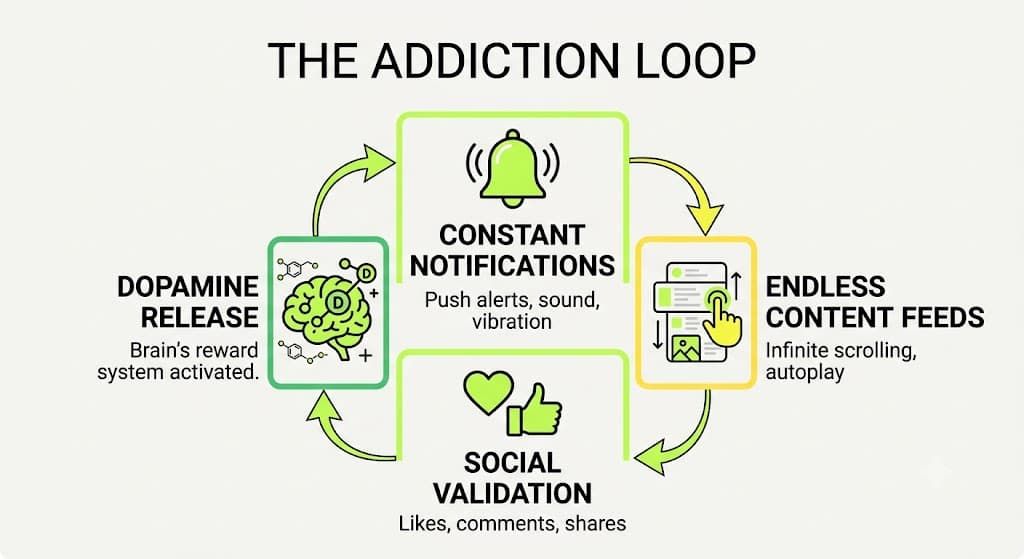
The rise in screen time addiction is not random. Technology is designed to keep users engaged.
Key reasons include:
- Constant notifications
- Endless content feeds
- Short-form videos
- Social validation (likes, comments)
Research shows that
addictive use patterns, not just total screen time, are linked with anxiety, depression, and behavioral problems .
Also, global reports show that
over 1 in 10 young users struggle to control their screen usage and show addiction-like symptoms .
This shows that the issue is not just high usage. It is compulsive usage.
Core Symptoms of Screen Time Addiction
Screen time addiction shows itself through clear behavioral and mental signs.
1. You Use Your Phone Longer Than Planned
Many people open their phone for a few minutes but end up using it for hours.
Studies show that
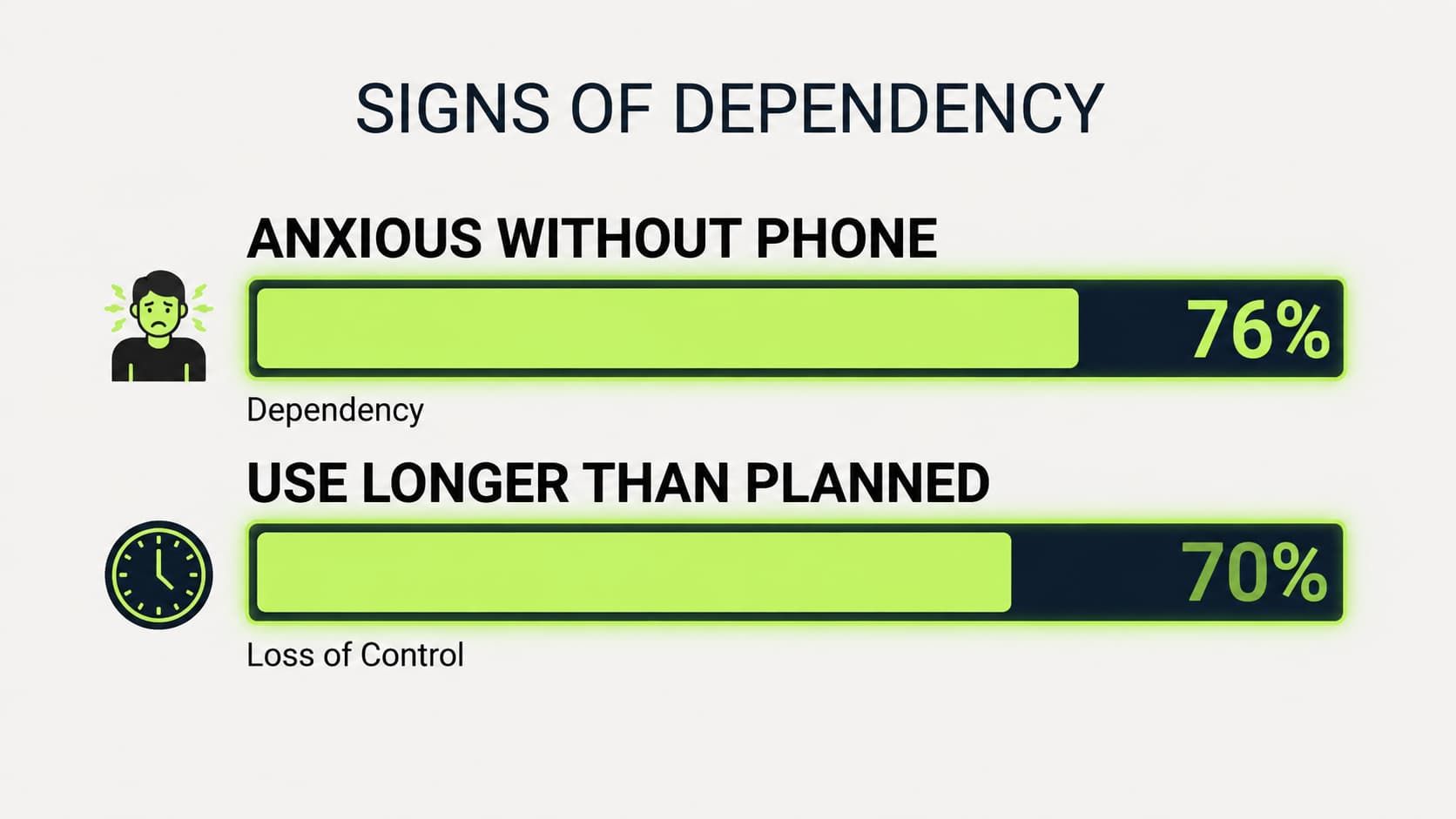
over 70% of users spend more time on their phone than they intend .
This is one of the earliest signs of addiction. It shows a lack of control.
2. You Feel Anxious Without Your Phone
A strong sign of screen time addiction is discomfort when the phone is not nearby.
- Feeling nervous when the battery is low
- Checking the phone repeatedly without reason
- Feeling restless without access
This is called dependency.
3. You Use Screens to Escape Problems
Many people use their phone to avoid stress, boredom, or emotional discomfort.
Instead of solving problems, they escape into content.
This creates a cycle where the phone becomes a coping tool.
4. Your Sleep is Getting Affected
One of the biggest hidden symptoms is poor sleep.
- Using phone before bed
- Difficulty falling asleep
- Reduced sleep quality
People with high screen time often feel tired even after sleeping.
5. You Are Losing Focus and Productivity
Screen addiction reduces attention span.
You may notice:
- Difficulty concentrating
- Switching tasks frequently
- Incomplete work
This directly affects work and learning.
6. You Ignore Real-Life Activities
Addiction starts affecting real life.
- Less social interaction
- Reduced physical activity
- Ignoring responsibilities
This creates imbalance in daily life.
7. Physical Symptoms Start Appearing
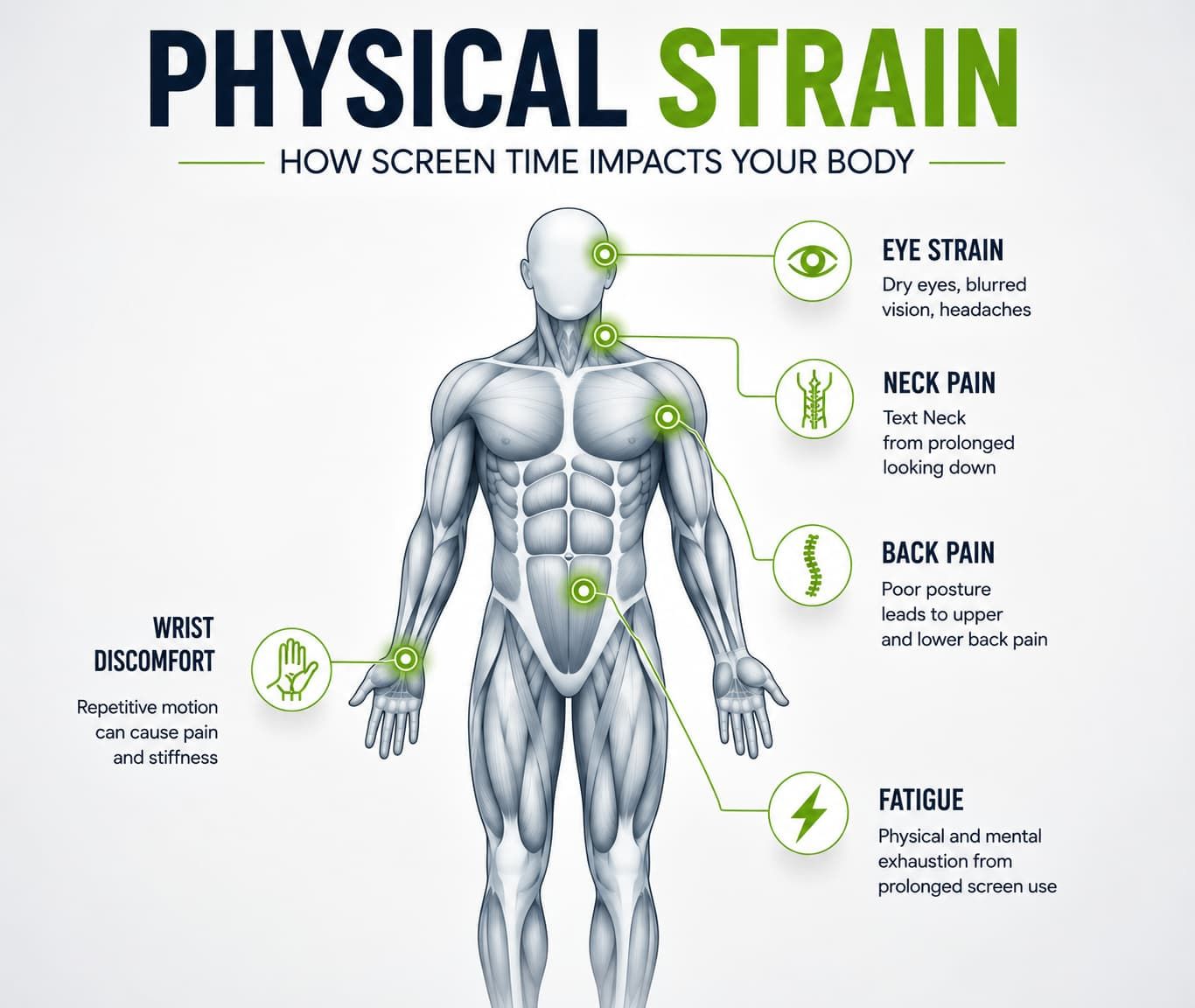
Screen time addiction is not only mental. It also affects the body.
Common signs include:
ARCC Studies show that many users report fatigue, sleep disturbance, and physical discomfort due to prolonged use .
These symptoms increase with continuous usage.
8. You Feel the Urge to Check Your Phone Constantly
Many people check their phone without any notification.
- Opening apps again and again
- Checking messages repeatedly
- Looking at the screen without purpose
This habit is driven by dopamine. It creates a loop that is hard to break.
Screen Time Addiction Impact Matrix
| Area | Impact of Addiction |
|---|
| Mental Health | Anxiety, depression |
| Sleep | Poor quality, insomnia |
| Focus | Low attention span |
| Physical Health | Pain, fatigue |
| Social Life | Reduced interaction |
| Productivity | Lower performance |
This shows how deeply screen time addiction affects daily life.
The Role of Habits in Screen Addiction
Screen time addiction is built through small habits.
Examples:
- Checking phone first thing in the morning
- Using phone during meals
- Scrolling before sleep
These habits become automatic over time.
Breaking addiction requires changing these habits step by step.
Digital Wellness: The Solution Approach
Digital wellness means using screens in a controlled and healthy way.
It focuses on:
- Awareness of usage
- Setting limits
- Building better routines
- Using technology for growth
Instead of removing screens, digital wellness helps you use them better.
Example
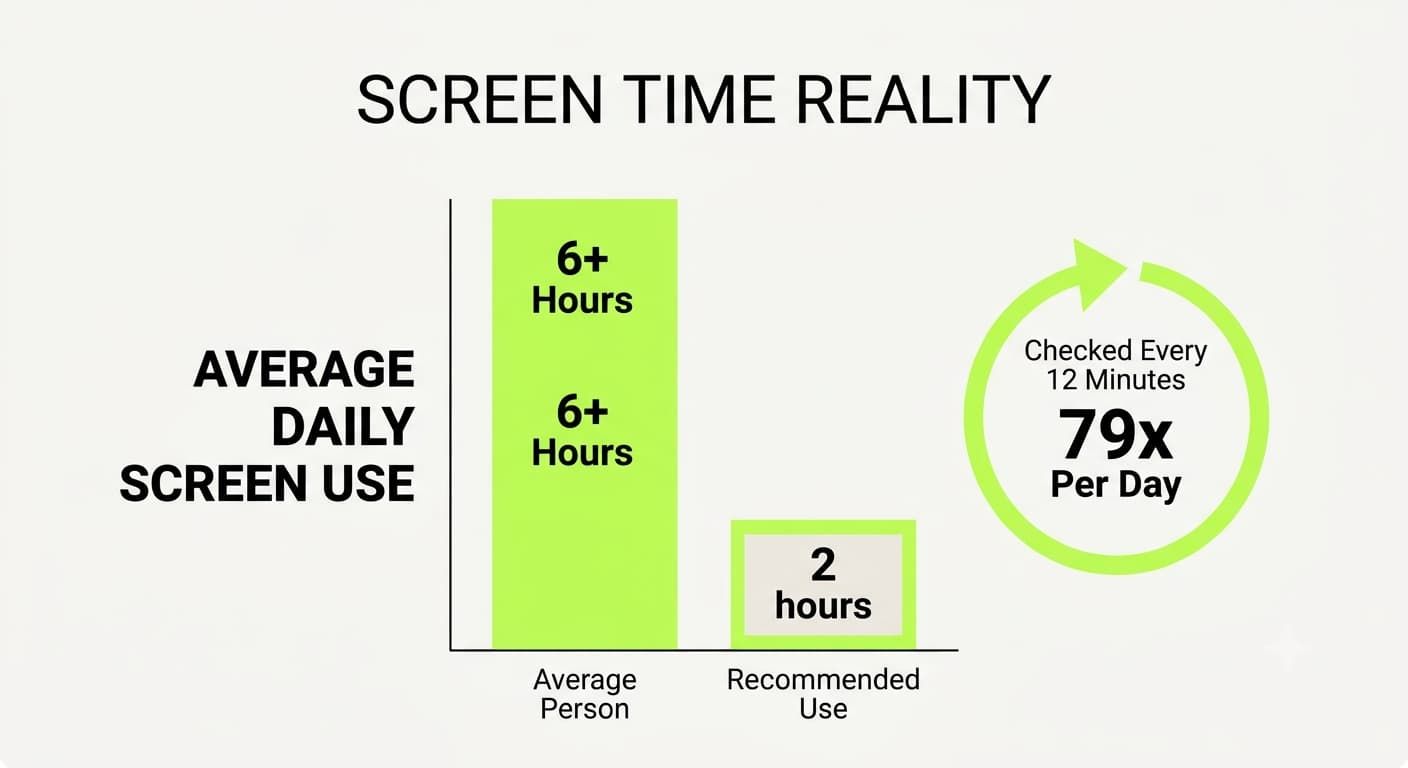
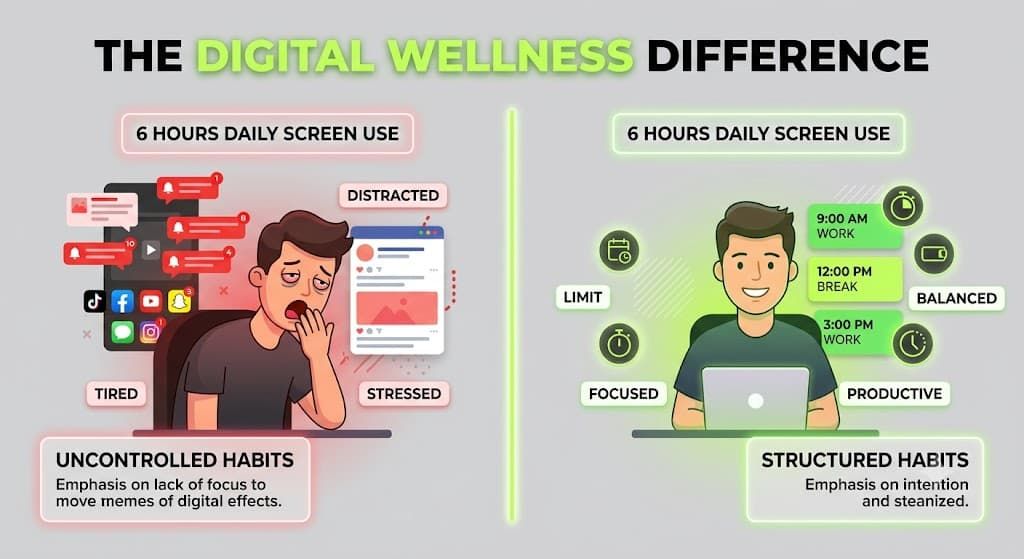
Consider two people with the same screen time of 6 hours daily.
- One uses the phone without control
- The other uses structured habits and limits
After a few weeks:
- The first person feels tired and distracted
- The second person feels focused and balanced
The difference is not time. It is habits.
Conclusion
Screen time addiction is not always easy to notice. It builds slowly through daily habits. Signs like anxiety, poor sleep, low focus, and constant checking show that control is slipping.
The key is awareness. Once you understand your habits, you can start improving them.
Building better routines and using tools that support focus and limit distractions, you can move towards digital wellness.
Jolt help in this process by allowing users to track usage, block distractions, and build healthier screen habits.
In the end, it is not about removing screens. It is about using them with control and purpose.
Frequently Asked Questions
-
How do I know if I have screen time addiction or just high usage?
High usage means you spend a lot of time on screens for work or learning. Screen time addiction means you cannot control your usage even when it affects your life. If you feel restless without your phone, use it longer than planned, or ignore important tasks because of it, these are signs of addiction. The key difference is control, not just time.
-
What are the first early signs of screen time addiction?
Early signs are often small but clear. You may check your phone again and again without reason. You may open apps automatically when you feel bored. You may also lose track of time while scrolling. These habits slowly become stronger and turn into addiction if not managed early.
-
Can screen time addiction affect mental health?
Yes, it can affect mental health in many ways. Excessive and uncontrolled screen use is linked with stress, anxiety, and low mood. It can also reduce focus and increase restlessness. When you replace real activities with screen use, your emotional balance may get disturbed over time.
-
How can I reduce screen time addiction in a simple way?
Start with small changes. Set time limits for apps. Turn off unnecessary notifications. Create fixed routines for using your phone. Add short breaks like meditation during the day. Track your usage to understand your habits. These simple steps help you regain control slowly and effectively.
-
What is digital wellness and how does it help?
Digital wellness means using screens in a healthy and balanced way. It focuses on awareness, control, and better habits. Instead of removing screens, it helps you use them for useful activities like learning and meditation. It improves focus, sleep, and overall well-being when followed consistently.

 Download Now
 Take charge of your time