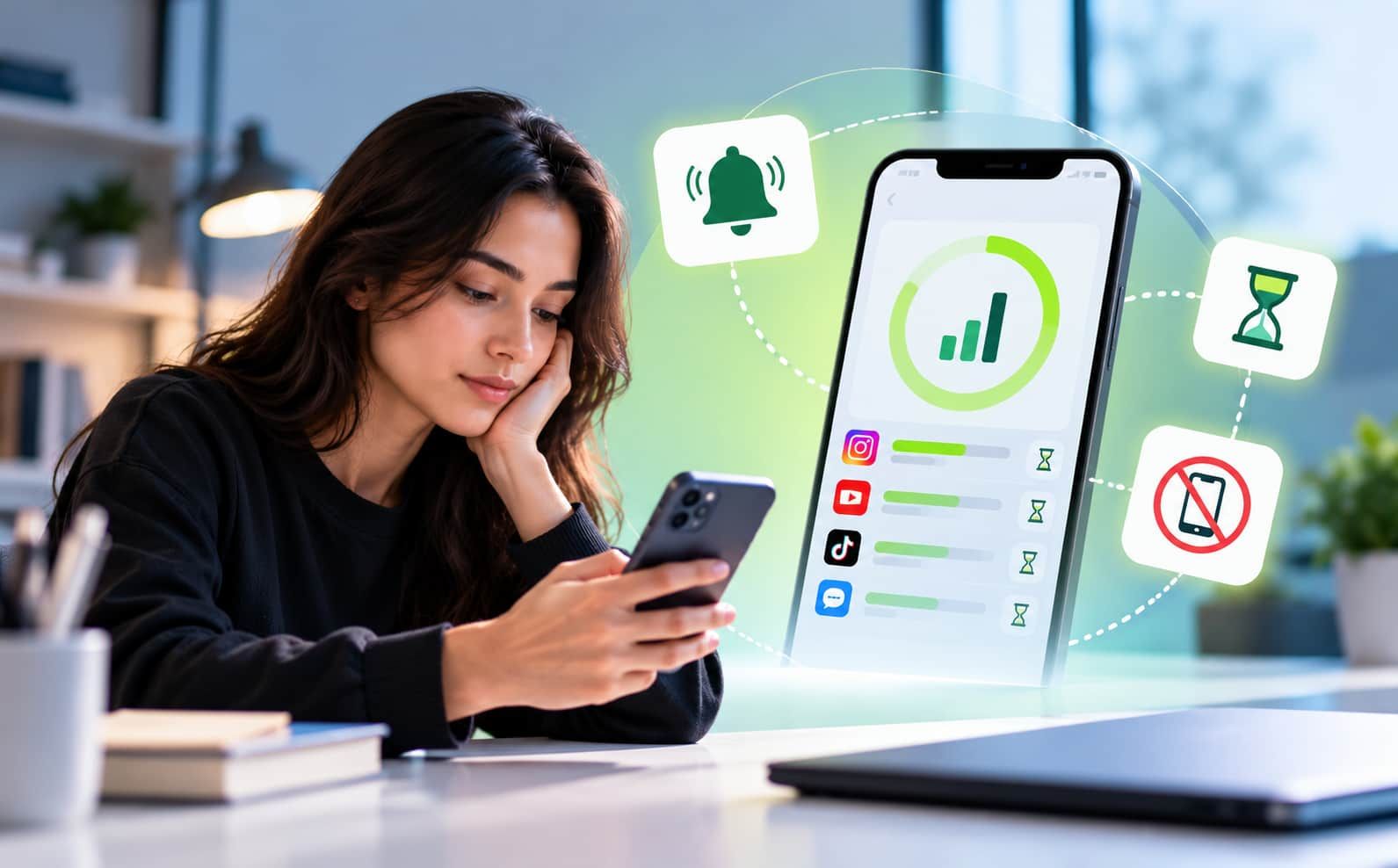
Screen Time App for Students to Avoid Social Media Distractions While Studying
Students today study in a highly connected world. Books, notes, and lectures are often supported by digital tools.
At the same time, phones remain the biggest source of distraction. Notifications, short videos, and social media feeds keep interrupting attention again and again.
Even when a student wants to focus, the habit of checking the phone breaks concentration.
This is where a
Screen Time App for students becomes important. It helps students control distractions, manage screen time, and build a clear, focused study routine.
Social media platforms are not built for learning. They are designed to keep users engaged for as long as possible. Every swipe shows new content. Every notification pulls attention back. For students, this becomes a daily struggle.
Research shows that around
77% of students feel distracted because of social media use. Many students also admit that they open apps without any purpose while studying.
This behaviour reduces the ability to stay focused for long periods.
Another report highlights that students often check their phones
every few minutes, which breaks the natural flow of learning.
This constant interruption leads to:
- Short attention span
- Low retention of information
- Reduced interest in long study sessions
Even when students sit for study, their mind stays divided between learning and checking updates.
This is not just a habit issue. It is a system problem where distraction is always available.
Excess screen time has a direct impact on how students perform in exams and assignments. Studies show that students spend more than
5 to 6 hours daily on screens, and a large part of this time is spent on non-academic content.
Research clearly indicates that:
- Higher screen time leads to lower academic performance
- Multitasking reduces memory and understanding
- Frequent phone use reduces deep thinking ability
When a student switches between study and social media, the brain needs time to refocus. This reduces learning efficiency.
Even a small interruption can break concentration and require several minutes to regain focus.
Another important point is that the presence of a phone itself
reduces attention, even if it is not actively used. This means that distraction is not only about usage, but also about accessibility.
Why Students Struggle to Control Screen Usage
Most students understand that excessive phone use is harmful. Still, they continue to use their devices during study time.
This happens because self-control alone is not strong enough against digital addiction.
Social media apps are designed using psychological triggers.
Features like endless scrolling, instant rewards, and notifications keep users engaged.
Fear of missing out also plays a major role. Students feel the need to stay updated, which leads to frequent checking of apps.
Without a proper system, students face:
- Poor time management
- Constant procrastination
- Lack of discipline
This is why simply deciding to “use the phone less” does not work. Students need a structured solution, and this is where a screen time monitoring app becomes useful.
What a Screen Time App Actually Does for Students
A Screen Time App works as a control system rather than just a tracking tool. It helps students create boundaries between study time and leisure time.
Instead of relying only on willpower, students can use technology to control technology.
- Block distracting apps during study hours
- Set daily limits for social media usage
- Create fixed study sessions with no interruptions
This approach converts intention into action. When distractions are removed, focus improves naturally.
Students do not need to struggle continuously. The system works in their favour.
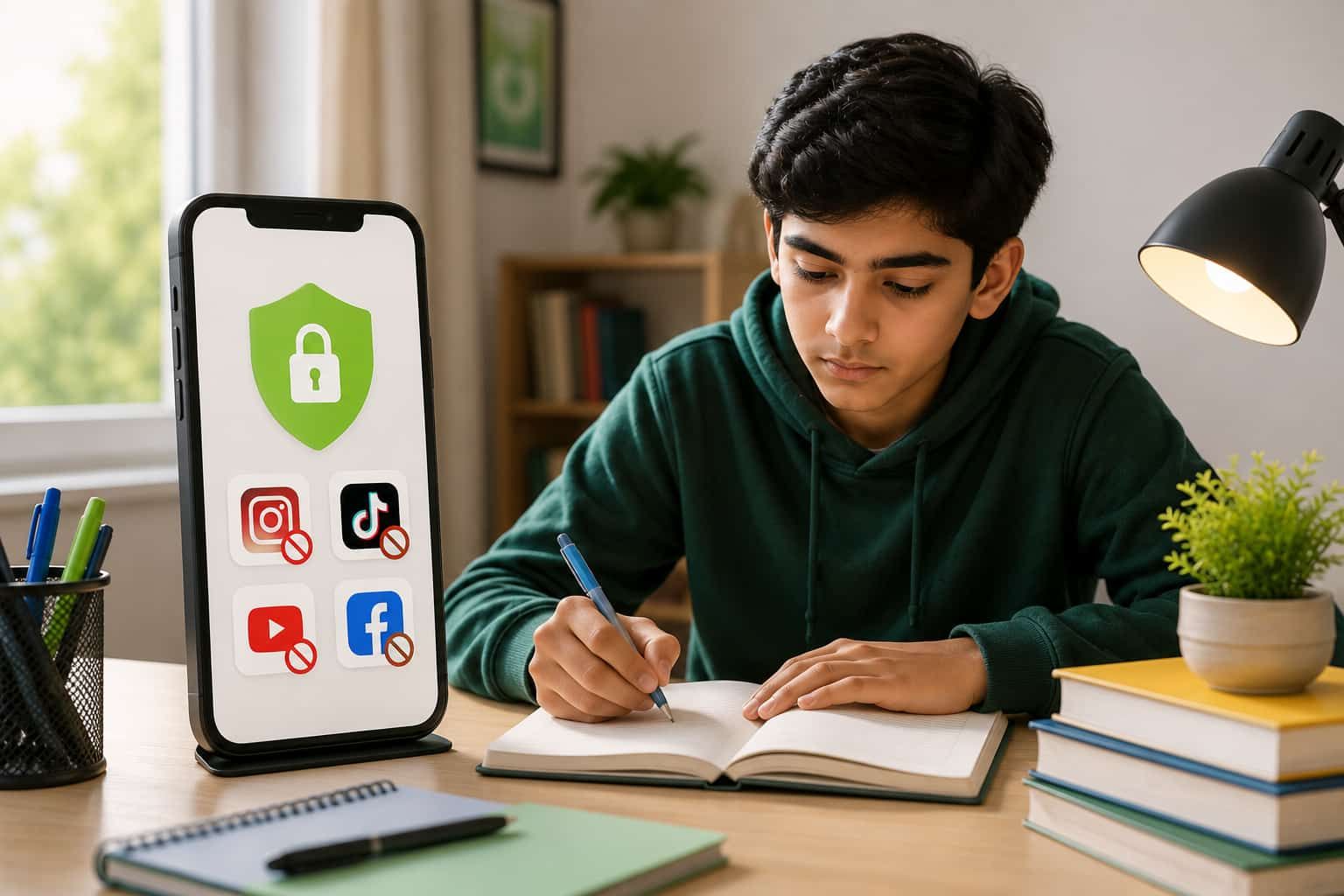
One of the most effective ways to improve focus is to remove access to distractions. A Screen Time App allows students to block social media apps during study sessions.
When apps like Instagram or YouTube are not accessible, the habit of checking them slowly reduces. This creates a distraction-free environment where students can focus fully on their work.
- Study for longer periods
- Understand concepts better
- Complete tasks more efficiently
This simple feature creates a strong impact on daily productivity.
Creating Structured Study Sessions
Many students study without a clear plan. They start studying but lose focus quickly. A best screen time app helps create structured study sessions.
Students can set:
- Fixed study time (for example, 60 or 90 minutes)
- Short breaks between sessions
- Strict no-phone periods
This method helps in building consistency. Research shows that
structured study sessions improve learning outcomes and reduce procrastination. When students follow a fixed routine, their brain adapts to focused work.
Structured sessions also reduce decision fatigue.
Students do not need to decide again and again whether to check their phone. The system already controls it.
Reducing Multitasking and Improving Focus
Multitasking is one of the biggest challenges for students. Many students try to study while chatting, scrolling, or watching videos. This reduces the quality of learning.
Research clearly shows that multitasking:
- Reduces memory retention
- Increases errors
- Slows down learning
A screen time monitoring app helps by blocking parallel app usage. This forces the student to focus on one task at a time. When the brain is fully engaged in one activity, understanding improves.
Single-task focus leads to:
- Better clarity
- Faster completion of work
- Stronger academic performance
Managing Daily Screen Limits
Another important feature of a best screen time control app is setting daily limits. Students can decide how much time they want to spend on social media.
For example:
- Social media: 30 minutes per day
- Entertainment apps: 1 hour per day
Once the limit is reached, apps get locked. This creates a natural boundary. Over time, students become more aware of their usage patterns.
Research shows that controlled screen usage leads to:
- Better time management
- More study hours
- Improved academic results
This feature helps students use their time in a more balanced way.
Late-night phone use is common among students. Many students scroll through social media before sleeping. This reduces sleep quality and affects the next day.
Poor sleep leads to:
- Low concentration
- Irritation
- Reduced learning ability
A screen time app can block apps at night and create a fixed sleep schedule. When students sleep on time, they wake up fresh and ready to study.
Better sleep improves:
- Focus
- Memory
- Overall academic performance
Building Long-Term Discipline
The biggest benefit of using an app for screen time is long-term habit building. Students slowly develop discipline and control over their digital habits.
Over time:
- Dependence on social media reduces
- Focus becomes natural
- Study becomes more consistent
This creates a strong foundation for future success. Discipline built during student life continues into professional life.
Conclusion
Students today face a constant battle with distraction. Social media and digital content make it difficult to stay focused. This affects study time, performance, and overall growth.
A
screen time monitoring app provides a structured solution. It blocks distractions, creates routines, and improves focus. It turns study time into productive time.
Instead of fighting distractions every day, students can build a system that supports their goals.
Jolt App helps students take control of their screen habits and move towards better focus and stronger academic results.
Frequently Asked Questions
-
How does a Screen Time App help students focus better?
A Screen Time App blocks distracting apps, reduces interruptions, and helps students stay focused on study tasks for longer periods daily.
-
What is the best screen time app for students?
The best screen time app offers app blocking, time limits, and study sessions to reduce distractions and improve daily academic focus.
-
Can a screen time monitoring app improve study performance?
Yes, a screen time monitoring app helps track usage, reduce distractions, and improve focus, which leads to better academic performance outcomes.
-
Is it safe to use an app for screen time control?
Yes, most apps for screen time are safe, secure, and designed to help users manage usage without affecting personal data privacy.
-
How much screen time is ideal for students daily?
Experts suggest limiting non-academic screen time to one or two hours daily to maintain focus, improve learning, and support healthy habits.

 Download Now
 Take charge of your time


 Twinkle